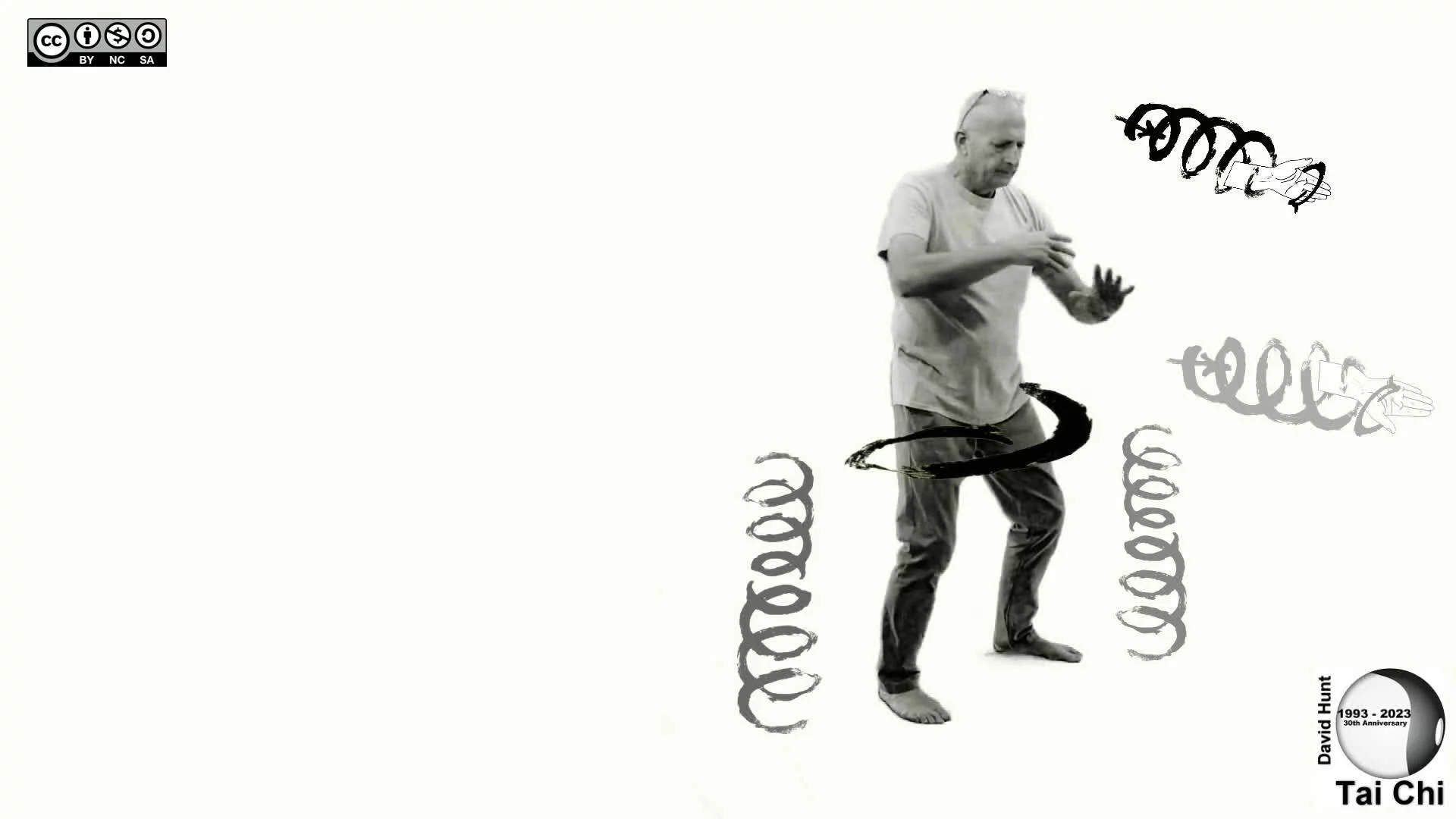
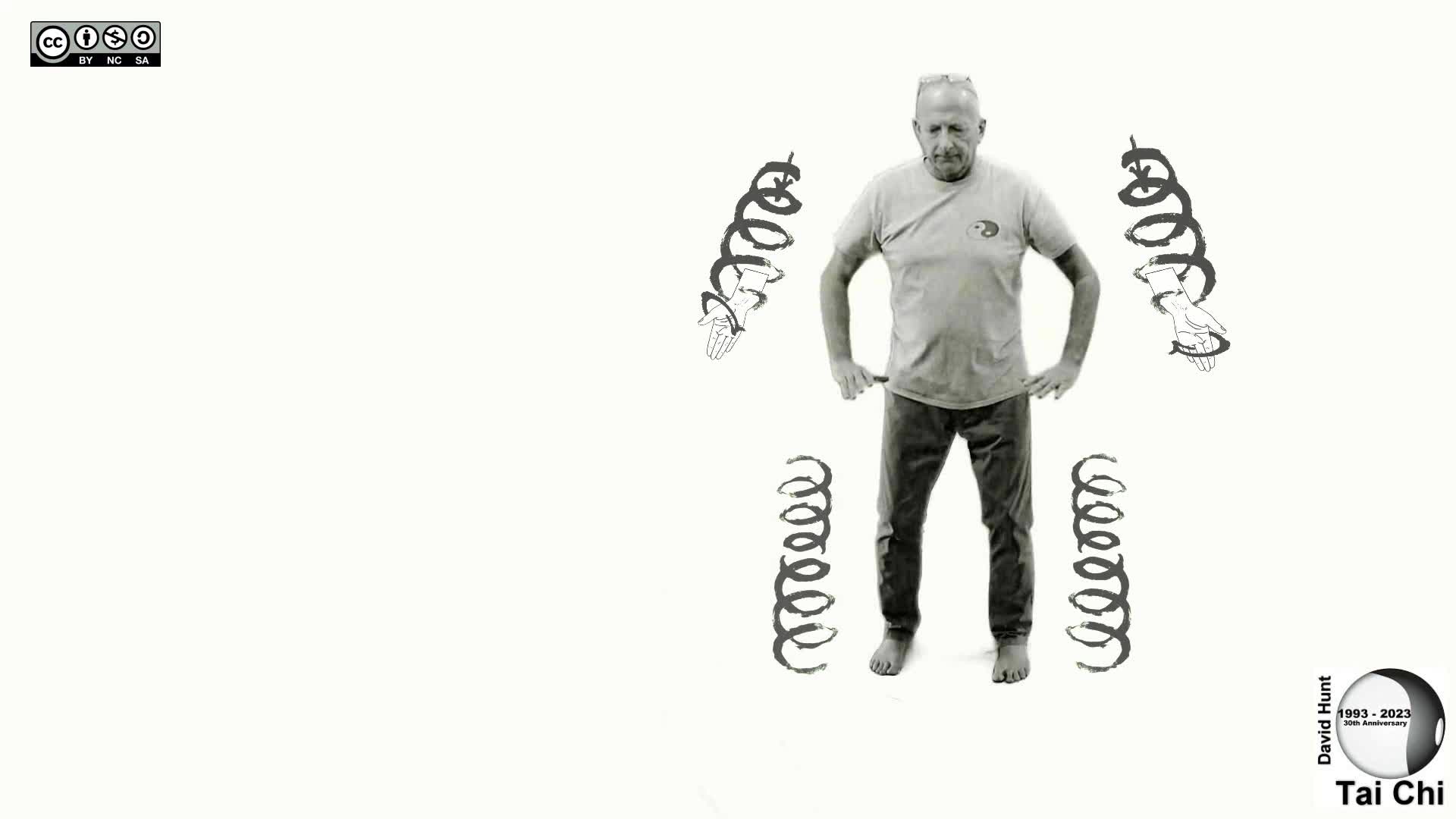
Guide to Embodied Tai Chi
The traditional indigenous wisdom held within the art of Tai Chi offers ways for us to develop a greater sensitivity towards our own internal physical self. Through posture and movement it is possible to have a heightened neurological perception of our muscles, tendons and even facia.
Eventually the aim will be to relax our thinking mind in order to allow our physical body to become open and naturally connected, to restore the harmonious dynamic balance between our mind and body. Yet we all have very different bodies. Bodies shaped by age as well as the knocks, wear and even emotions of a life lived.
So when learning Tai Chi a picture or photograph can provide a pattern or pose that we can copy. A video can demonstrate the movement between each pose. A teacher can explain and demonstrate. A book can provide knowledge and explore the supporting wisdom behind our practice. A traditional ‘song’ or poem indirectly conveys a hidden meaning. However, what follows here are guides drawn from traditional teaching but with the intention of helping to explore a very different way of understanding Tai Chi.
These guides will never be a good read, please use them as a reference work and simply jump to the sequence that you are interested in.
These guides are intended for both beginners and experienced Embodied Tai Chi students. They suggest a way to unfold our own personal best posture through awareness and sensitivity towards our internal physical sensations. It is intended that the written guides will be supported with a variety of audio and visual learning material and will be continuously updated as a living document.
IMPORTANT PLEASE READ
There is only one rule when practicing Embodied Tai Chi: ‘don’t do anything that makes you feel physically or emotionally uncomfortable, after uncomfortable comes tension, after tension comes injury’. Remember you are a Tai Chi ‘player’, trying too hard or taking the art too seriously can cause tension that hinders your practice.
The contents here provide a simple guide and are not intended to be an instruction manual, you take responsibility and all liability for your own practice.
26 Breaths
165 BREATHS
A Guide to Embodied Tai Chi in 165 Breaths
Unfolding the Yang Family Long Form
At its core Embodied Tai Chi is grounded in the traditional teaching of the Yang Family Long form seen from a Western neurological – somatic perspective. This guide has been developed from the traditional Yang Family long form interpreted as 165 Breaths and 26 Sequences of movement.
The 165 Breaths Podcast:
This guide to embodied Tai Chi practice is based on the Yang Family Long Form, emphasizing internal awareness, balance, and sensory perception.
Interpreted through a Western neurological-somatic lens the guide focuses on developing internal awareness, sensitivity, and balance between mind and body. It utilises movement and posture using 165 breaths as a fundamental rhythm to perceive opposites.
The Embodied Tai Chi guide includes: Personalization and Safety in Practice, Encourages finding individual best postures based on body flexibility and proportions, Prioritizes comfort while warning against forcing movements to prevent tension and injury and Focuses on soft, compassionate intentions.
Historical manuals and modern interpretations guide practice and understanding of postures and movement including additional Resources and References.
PLEASE NOTE: This summary and podcast has been produced by a human being using Adobe Generative AI.
-
• 05/02/2026
001 Sequence: Commencement of the whole series
SEQUENCE:Commencement of the whole series is repeated 1 time in the form.
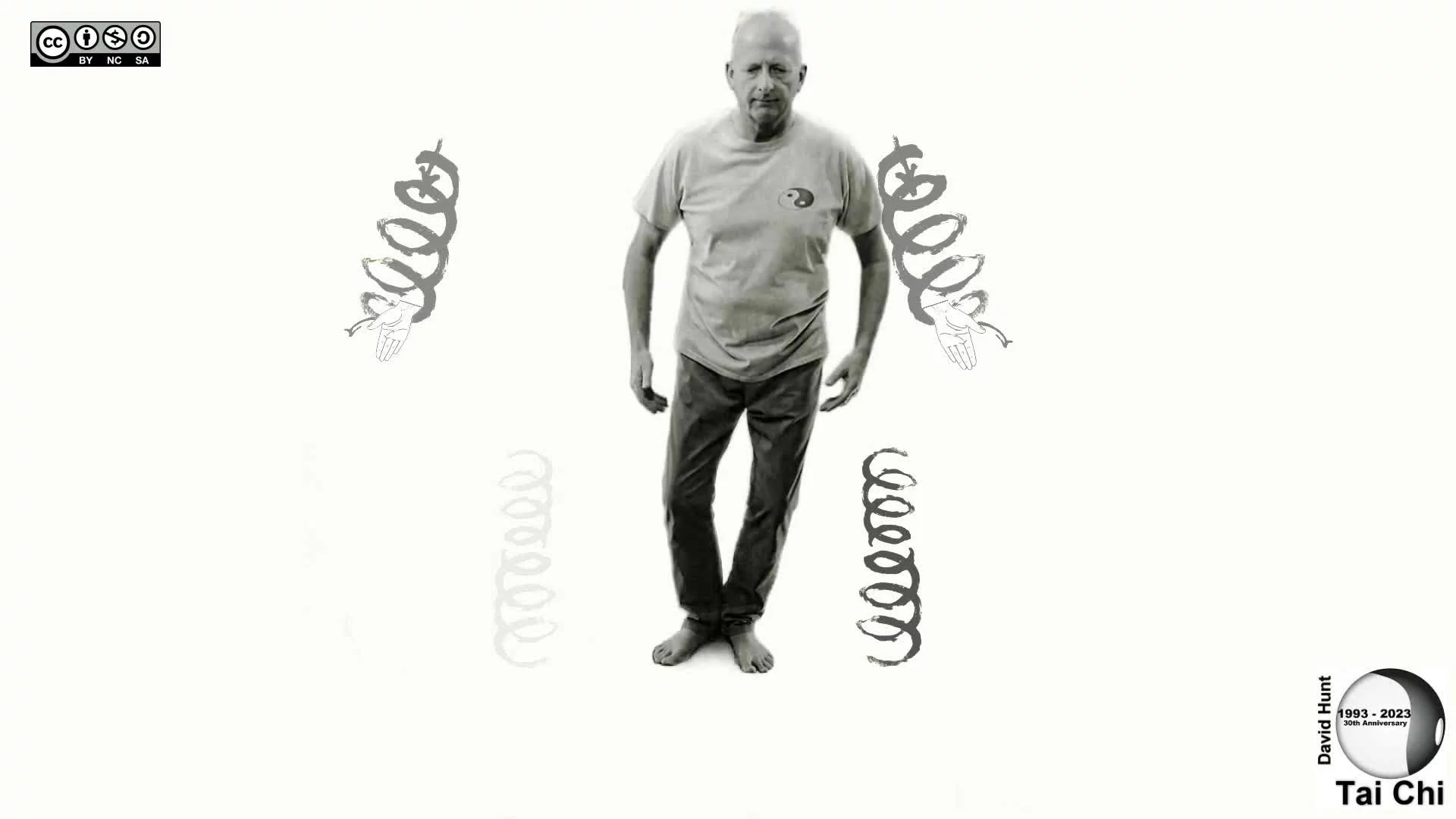
POSTURE: Traditionally first seen as posture number 1 in the Long Form it is also translated as Beginning, Qǐ shì 起式. See video 001. This sequence follows ‘Preparation’ and is performed with 3 breaths.
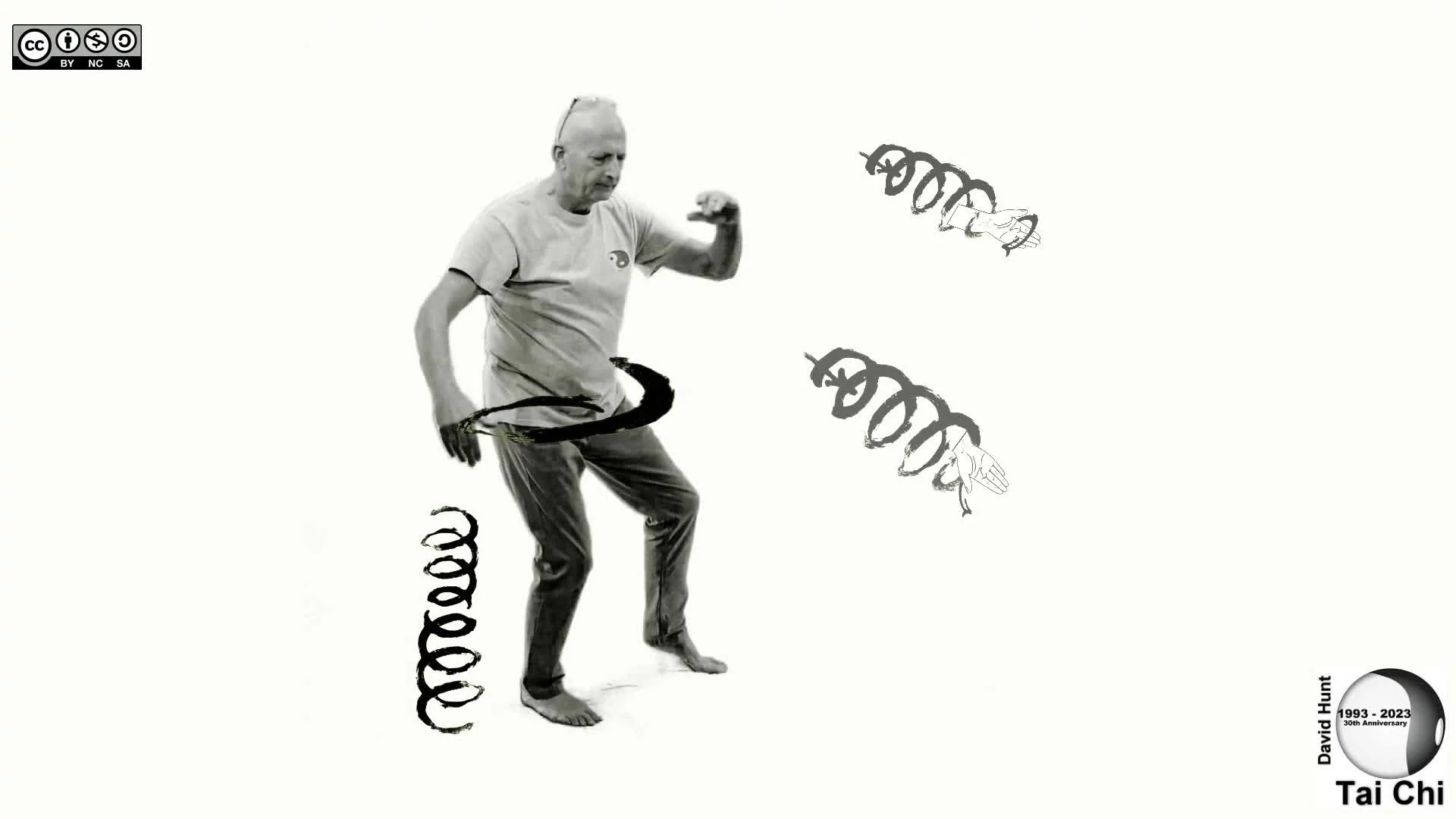
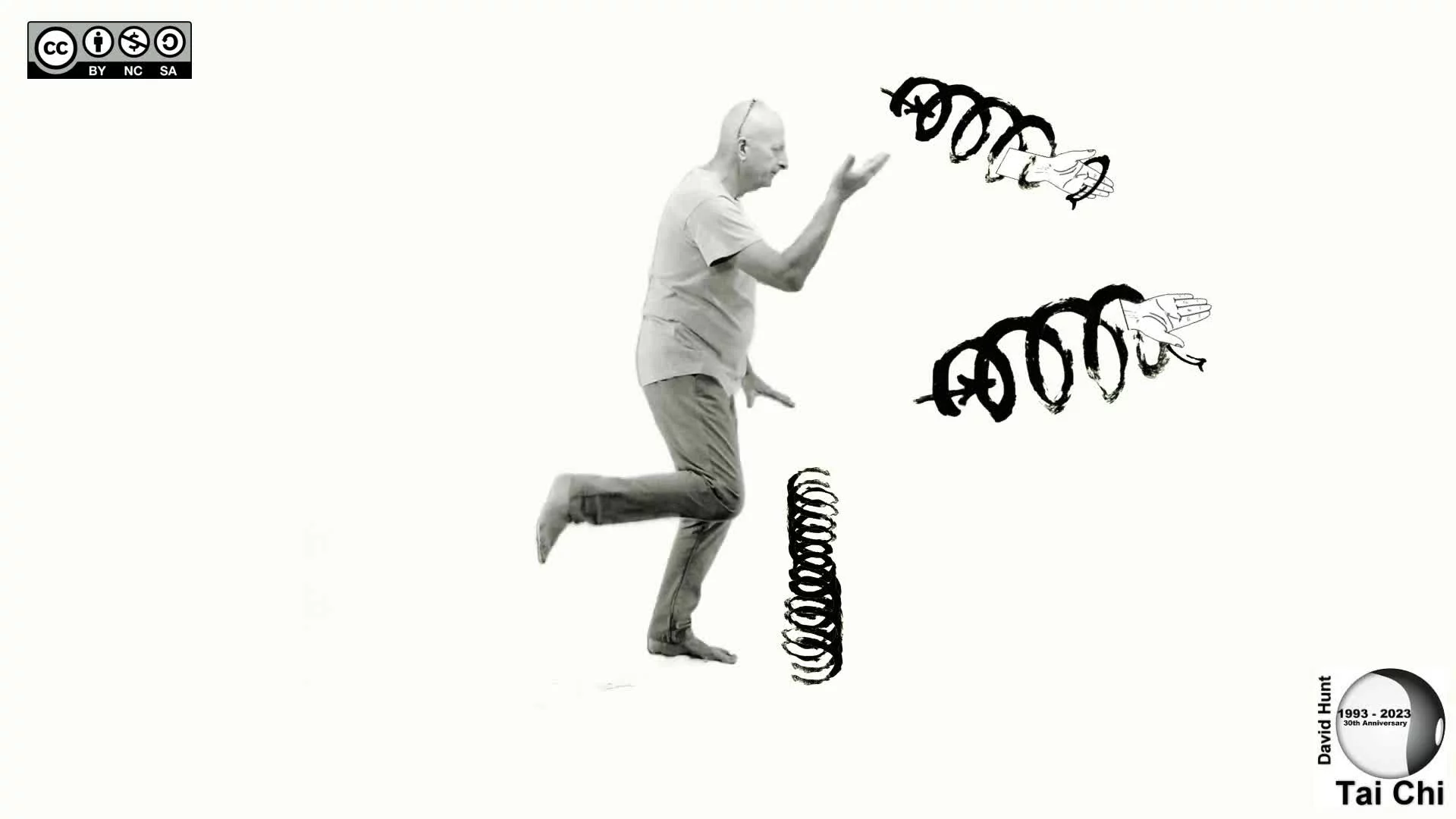
IN BREATH 1: With the heels close together find a bouncy springy sensation in both legs. Move your centre of gravity so that you flex or sink down into the spring of the left leg. Let the right knee float up. The thumbs turn outwards rotating the palms towards the body. When the hands are in the correct position this movement has the sensation of the shoulders flexing forward opening the shoulder blades.
INTENTION: The Embodied Tai Chi soft intention can be thought of as the first awareness of movement and separation. A change from feeling the bouncy springy sensation in both legs to feeling it clearly in one defined leg.
ROOT: This is perhaps the most pivotal movement in the Tai Chi form but often overlooked in the desire to ‘get into’ the main body of the practice. Here we move from a state of stillness or Wu Chi into experiencing the physical sensation or manifestation of opposites Tai Chi. We feel the force of gravity in the bouncy springy sensation of the left leg. At the same time the right leg becomes free to float upwards. The left leg is said to be ‘full’ or ‘Yang’ while the right leg is referred to as ‘empty’ or ‘Yin’. However, these are not Western mutually exclusive opposites but should be understood from the Eastern concept of mutually inclusive and dynamic opposites encapsulated in the yin yang symbol.
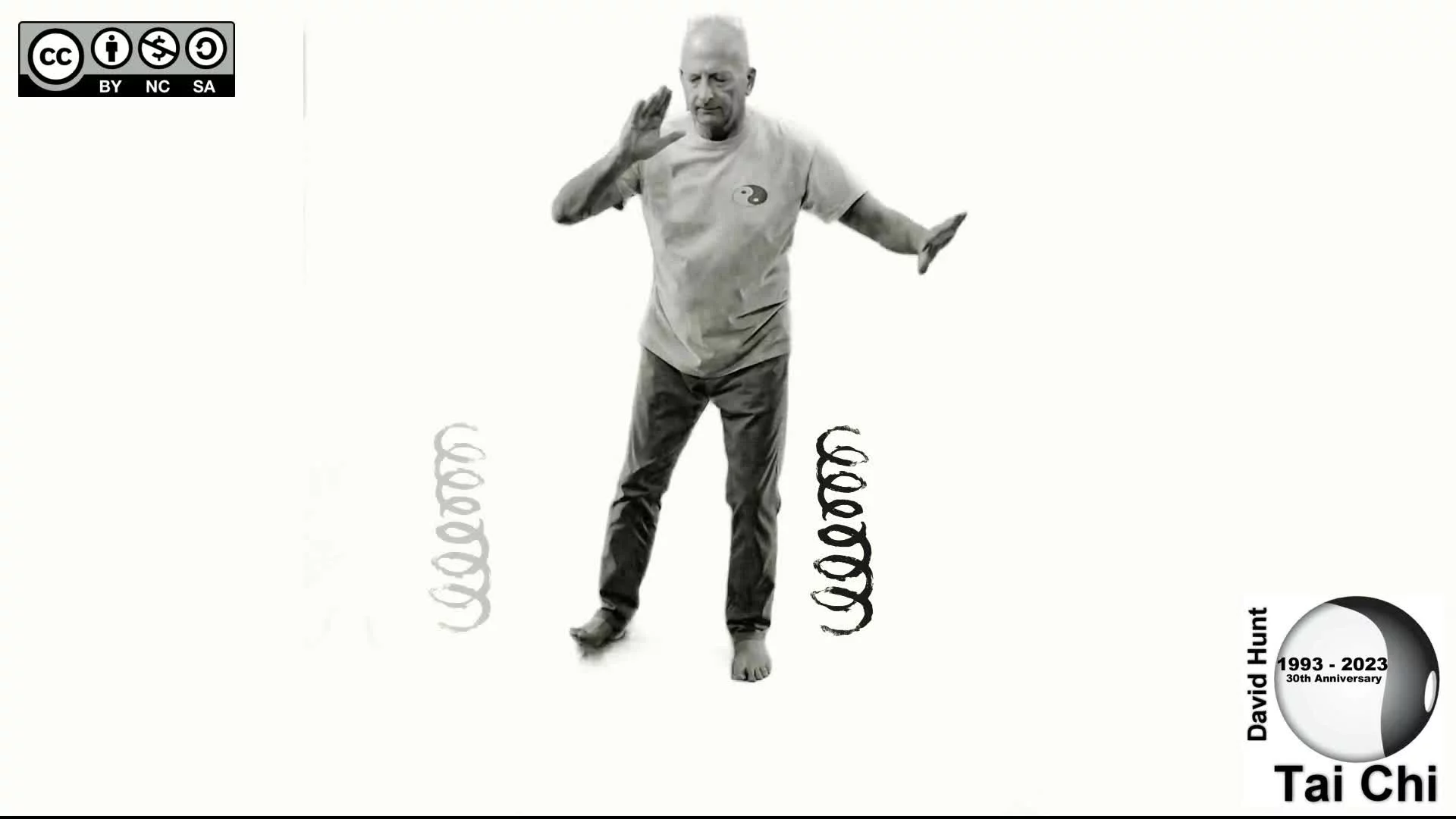
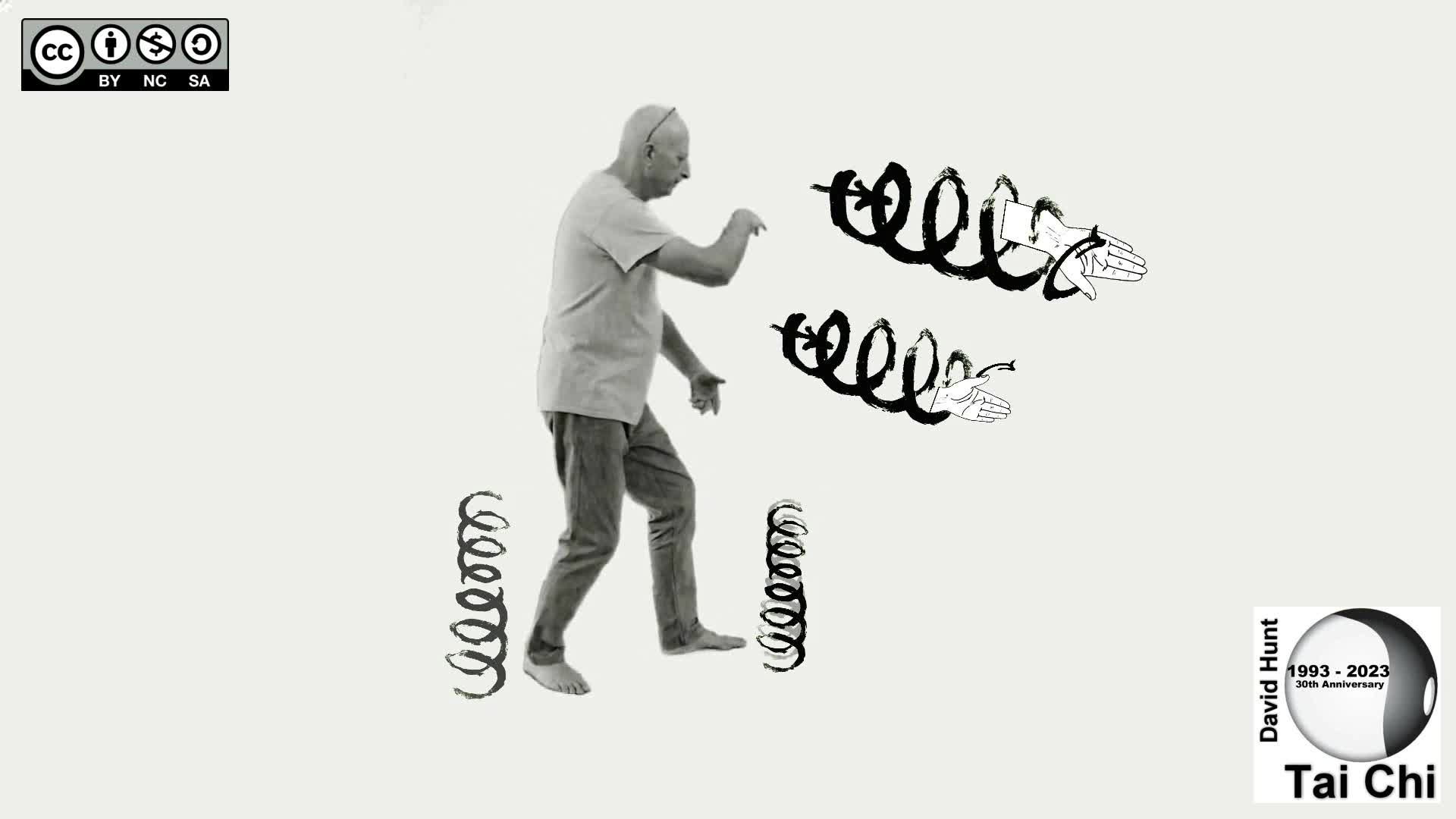
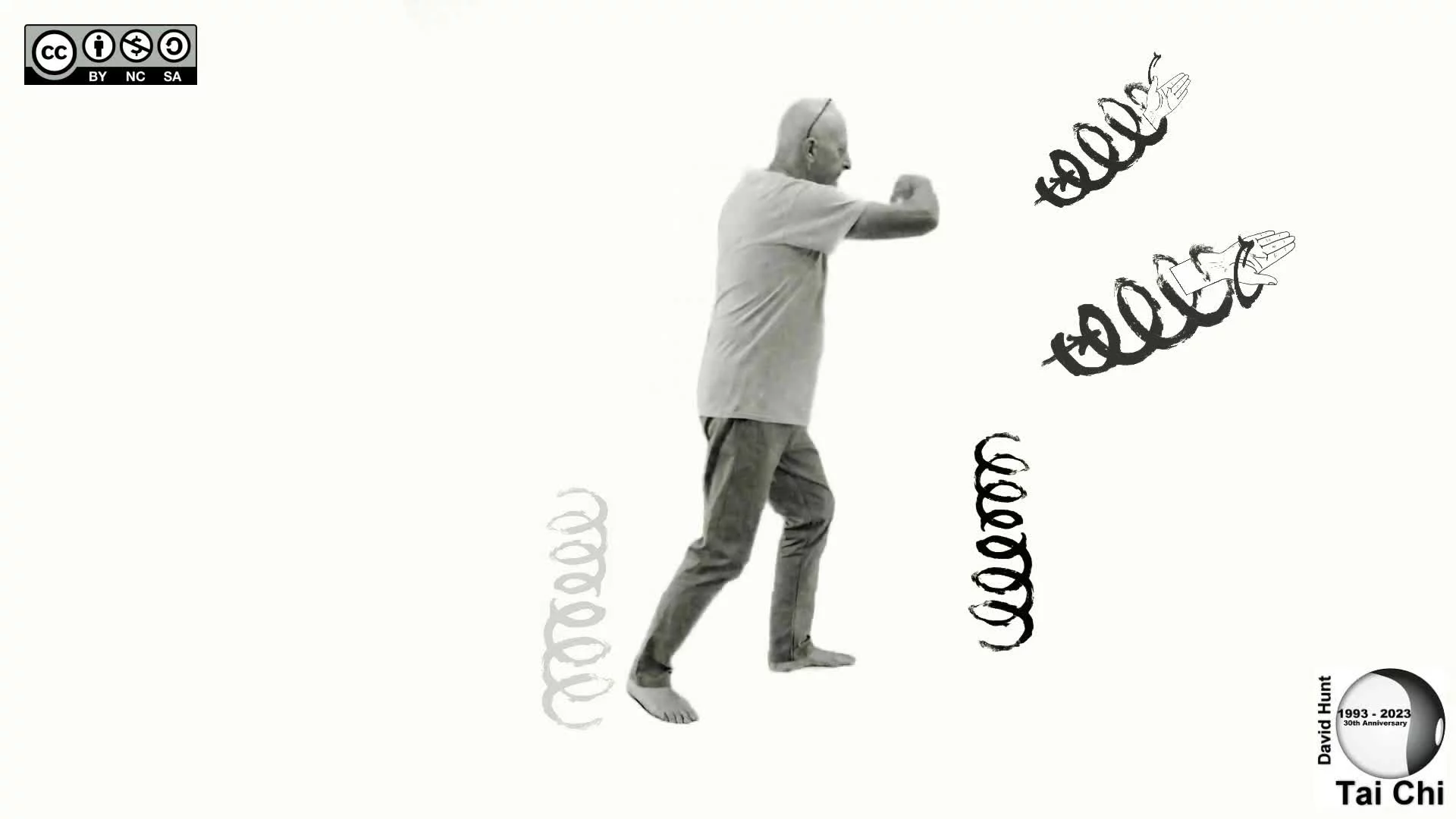
OUT BREATH 1: Step to the side placing the right heel on the floor. Turn the right foot in on the heel and place the foot down transferring the bouncy springy sensation to the right leg. The thumbs turn inward rotating the palms away. When the hands are in the correct position this movement has the sensation of flexing the shoulders back closing the shoulder blades opening the chest.
INTENTION: ‘Brush the Grass Away’. The Embodied Tai Chi soft intention can be thought of as stepping through a field of waist high grass. The rotating palms flex the elbows outward brushing the grass aside with your forearms. The martial application must be applied with compassion and may be seen as a way to break free from an arm lock applied from your rear. The spiralling arms disrupt a hold with the same effort as brushing grass stems aside.
IN BREATH 2: ‘Lift Yourself off the IKEA Sofa’. Let go of all intention and flexing. Lift the left toes off the ground and turn the left foot clockwise pivoting on the heel. Place the left foot down sensing the bouncy springy sensation is in both legs. At the same time press down and away from the body with the heel of the palms. When the hands are in the correct position this movement has the sensation of the shoulders flexing forward opening the shoulder blades.
INTENTION: The Embodied Tai Chi soft intention can be thought of as the hands lifting you up from a seated position like a low sofa or bed. The martial application must be applied with compassion and would be applied as a strike behind with the heel of the hand.
OUT BREATH 2: ‘Hands Float Up’. Let go of all flexing. Keeping the bouncy springy sensation in both legs let the backs of the wrists float upwards. The thumbs turn outwards rotating the palms in. The upward movement of the hands must stop before the shoulders start to lift. When the hands are in the correct position this movement has the sensation of flexing the shoulders back closing the shoulder blades opening the chest.
INTENTION: The Embodied Tai Chi soft intention can be thought of as balloons tied to each wrist floating upward lifting the hands. The martial application must be applied with compassion and would be applied perhaps to a deflection away.
IN BREATH 3: Let go of all intention and flexing. Keep the bouncy springy sensation in both legs. Lift the fingers turning the thumbs inward so the palms of each hand draw back and face forward. Then lower the hands and continue to turn the thumbs inwards rotating the palms so they press down and away from the body with the heel of the palms. When the hands are in the correct position this movement has the sensation of the shoulders flexing forward opening the shoulder blades.
INTENTION: The Embodied Tai Chi soft intention can be thought of as rolling the hands back over a barrel then pressing down as though lifting you up from a seated position like a low sofa or bed. The martial application must be applied with compassion and would be applied as a strike behind with the heel of the hand.
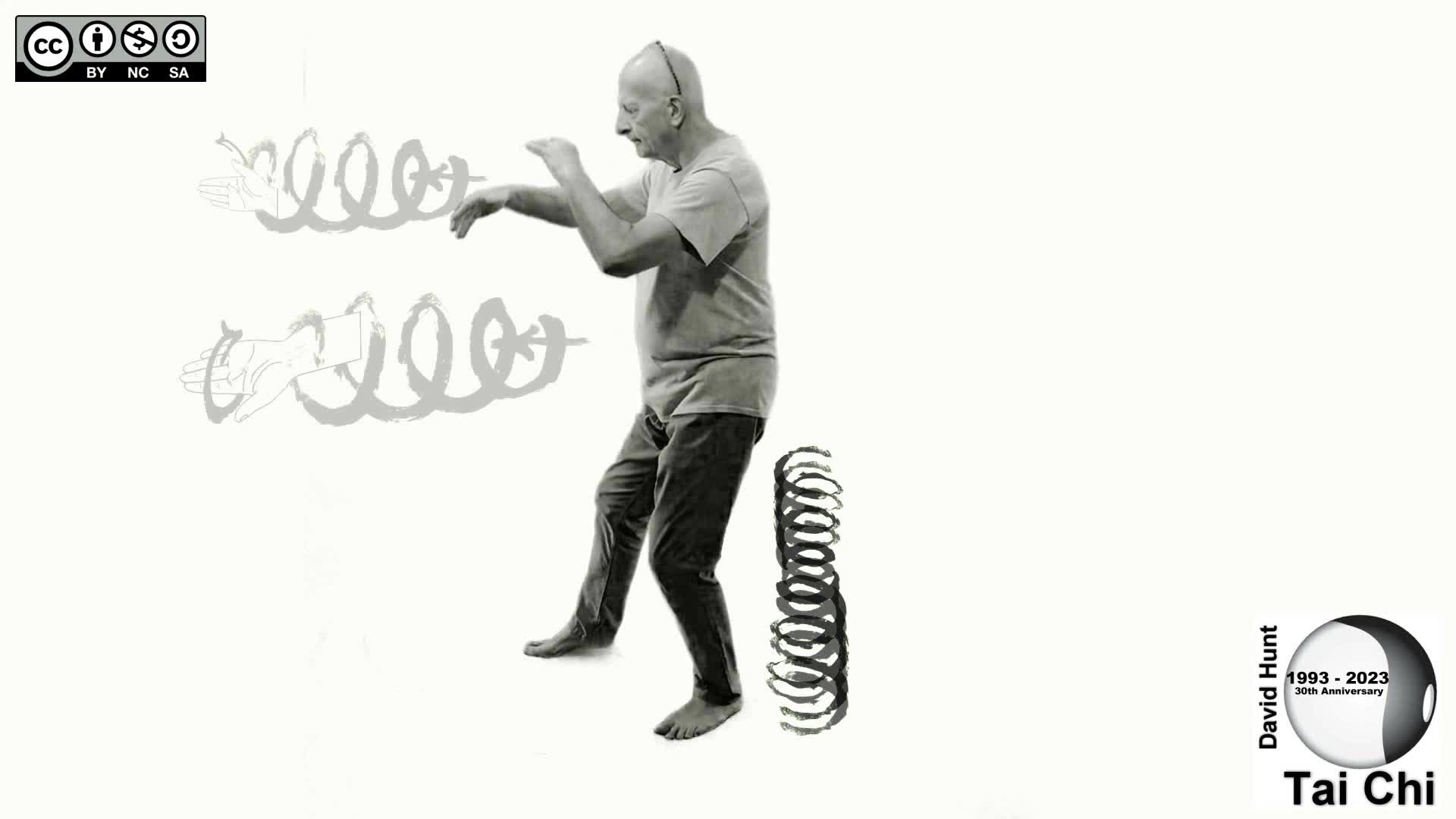
OUT BREATH 3: ’Shoo the Cat off the Sofa’ and ‘Hands Move Like Windscreen Wipers’. Let go of all flexing. Relax the hands turning the right thumb outward and the left thumb inward flexing the arms and rotating the back of the hands to face diagonally to your right. Lift the hands away to your right keeping the flex in the arms. Stop before the shoulders lift. The elbows remain in that position as the hands circle anticlockwise away from the body. The right thumb stops in front of the face and the left hand stops facing away off to the right side of the body around chest height so both the palms to face to your left. When the hands are in the correct position this movement has the sensation of flexing the shoulders back closing the shoulder blades opening the chest.
INTENTION: The Embodied Tai Chi soft intention can be thought of as starting with gently shooing a pet off the sofa with the backs of the hands. The hands then move across the front of the body like a vehicle windscreen wipers or perhaps swatting away small insects. The martial application must be applied with compassion and would be applied as sweep or block to the right then a deflection or strike to the left.
-
• 05/02/2026
002 Stroke Peacocks Tail Sequence
SEQUENCE: Stroke Peacocks Tail is repeated 1 time in the form.
POSTURE: This sequence follows ‘Commencement of the whole series’. See video 002. This sequence is performed with 1 breath;
IN BREATH 1: Lift the toes off the ground on the right foot transferring the springy sensation to the left leg. Turn the right foot out pivoting on the heel while letting go of the spring in the left leg transferring your weight firstly into the right heel as it turns and then as the right foot is rolled down transfer the springy bouncy sensation back to the right leg. The right foot turns the hips and shoulders clockwise. The left hand sinks down towards the groin, thumb turning inwards rotating the palm of the hand away and elbow out. The right thumb turns inwards rotating the palm to face away. All your weight shifts to the right leg momentarily allowing a sinking down into or flexing the springy sensation as you let the left knee float upwards in ‘step up’. When the hands are in the correct position this movement has the sensation of the shoulders flexing forward opening the shoulder blades.
INTENTION: The Embodied Tai Chi soft intention can be thought of as protecting the sensitive groin area. The martial application must be applied with compassion and would be a deflecting movement. The cross lateral action / intension is through the left hand and right leg.
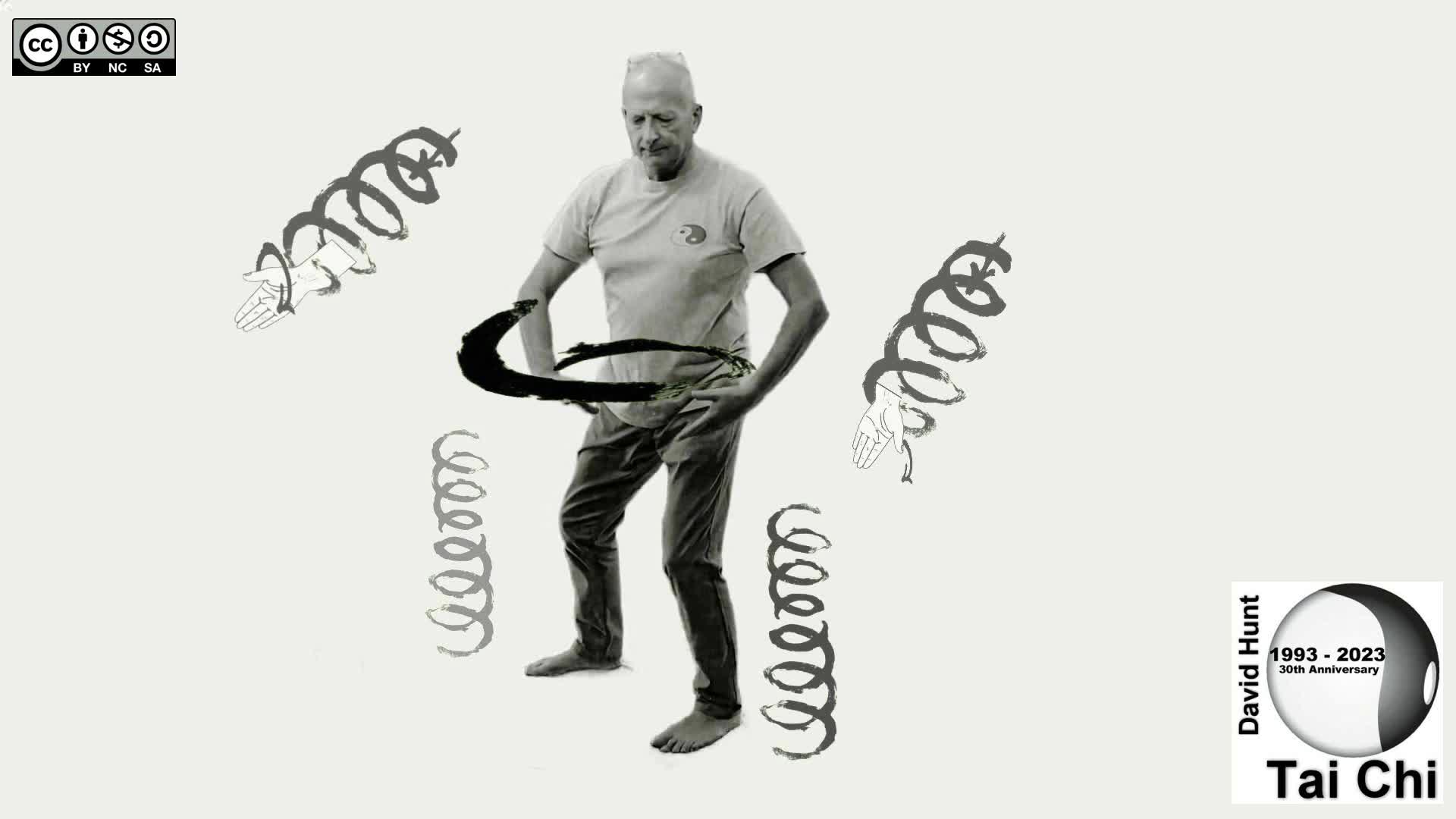
OUT BREATH 1: Let go of your flexing. Step diagonally down and to your left placing your left heel down retaining the bouncy springy sensation in the right leg. Turn your left foot in rotating on the heel then roll the foot to the floor transferring the springy bouncy sensation to the left foot. At the same time the left hand floats upwards towards chest height the thumb turning the palm outwards to face you. The right hand floats down towards the waist passing the left hand coming up.
Finally the hips turn the shoulders anticlockwise flexing the spring in the left leg. The left hand flexes the left arm and the right hand lifts flexing the right arm. When the hands are in the correct position this movement has the sensation of flexing the shoulders back closing the shoulder blades opening the chest.
INTENTION: The Embodied Tai Chi soft intention can be thought of as the left arm being held in the way waiters in a restaurant holds a napkin over their arm. The final action can be thought of as a peacock perched on the left arm facing away from you. The right hand gently strokes down the peacocks back and tail. The martial application must be applied with compassion and could be applied as a deflecting away with the left arm. The cross lateral action / intension is through the right hand and left leg. ROOT: Stroke the Peacocks Tail is associated with ward off left or the trigram peng, HEAVEN, Ward Off and Upward Slanting.
-
• 12/02/2026
003 Grasp the sparrows Tail Sequence
SEQUENCE: Grasp the sparrows Tail is repeated 1 time in the form.
POSTURE: Traditionally first seen as posture number 2 in the Long Form. Grasp the Sparrows Tail is also translated as Grasp the Bird’s Tail, 揽雀尾 Lǎn què wěi. While Grasp the Sparrows Tail is often grouped with the subsequent movements here we treat it as a distinct sequence. See video 003. This sequence follows ‘Stroke Peacocks Tail’. This sequence is performed with 1 breath;
IN BREATH 1: Let go of all intention and flexing. Turn the waist clockwise sitting back on the left leg sinking down into its spring. As you turn the waist your left thumb turns inwards rotating the palm of the hand away from your face. The right hand floats up with the thumb turning outwards so the palms of the hands are level with each other fingers and arms flexed as though you are holding a ball in front of your face. When the hands are in the correct position this movement has the sensation of the shoulders flexing forward opening the shoulder blades.
INTENTION: The Embodied Tai Chi soft intention can be thought of as supporting a ball with gently flexed fingers in front of your face. The martial application must be applied with compassion and would be a headlock. The cross lateral action / intension is through the right hand and left leg. ROOT: ‘Ball in front of your face’ can be related to the element EARTH and the trigram lui, Roll Back, Receiving calmly.
OUT BREATH 1: Let go of intention and flexing. Allow your weight to momentarily flex the left leg so you can step diagonally forwards. Place your right heel down then roll the foot to the floor transferring the bouncy springy sensation to the right leg. The right thumb turns out rotating the palm to face up. The left thumb turns in rotating the palm to face down with the fingers just above the right wrist. When the hands are in the correct position this movement has the sensation of flexing the shoulders back closing the shoulder blades opening the chest.
INTENTION: The Embodied Tai Chi soft intention can be thought of as a small bird sitting in the palm of the right hand with its tail feathers resting on the upturned back of the wrist. The fingers of the left hand are gently pressing on the tail feathers with just enough pressure to stop the bird flying away. Focused intention using compassion rather than force in order to not harm the small bird. Another interpretation is found in the story of a Tai Chi Master who would get a bird to land on his hand. Every time the bird tried to fly away the Master could sense its movement and drop his hand so the bird could not take flight. Therefore from a martial perspective Grasp the Sparrows Tail can be thought of as developing a controlling neurodynamic sensitivity through the hands. The cross lateral action / intension is through the left hand and right leg.
-
• 19/02/2026
004 Single Whip Sequence
SEQUENCE: Single Whip單 鞭 dān biān is repeated 1 time in the form.
POSTURE: Traditionally first seen as posture number 3 in the Long Form. The sequence follows ‘Grasp the sparrows Tail’. See video 004. This sequence is performed with 5 breaths;
IN BREATH 1: ‘Throw Down’. Let go of all flexing sitting back turning your waist anticlockwise. At the same time transfer the bouncy springy sensation to the left leg. The right thumb turns in rotating the palm to face down in a throwing down motion. The left thumb turns out rotating the palm to face across the front of the body. When the hands are in the correct position this movement has the sensation of the shoulders flexing forward opening the shoulder blades.
INTENTION: The Embodied Tai Chi soft intention can be thought of as pressing or gently planting a seed into soft soil. The martial application must be applied with compassion and would be applied to unbalance, deflect or throw an attacker. The cross lateral action / intension is through the right hand and left leg. ROOT: ‘Throw Down’ is related to the element EARTH and the trigram lui – Roll Back, Receiving calmly.
OUT BREATH 1: ‘Double Handed Push’. Let go of all intention and flexing. The waist turns clockwise as the body moves forward transferring the bouncy springy sensation back to the right leg. The right hand floats up. The right thumb turns out rotating the palm to face the body. The left hand follows behind the right hand as the thumb turns in rotating the palm to face the right hand. The posture ends with the right palm facing the body and the base of the left palm pressing the right wrist. When the hands are in the correct position this movement has the sensation of flexing the shoulders back closing the shoulder blades opening the chest.
INTENTION: The Embodied Tai Chi soft intention can be thought of as a double handed push or press. The martial application must be applied with compassion and could be applied as a strike with the left hand that is hidden by the right hand and directed through the right wrist. The cross lateral action / intension is through the left hand and right leg. ROOT: Single Whip is associated with the element WATER and the trigram chai – Press - The sinister, unorthodox, hidden.
IN BREATH 2: ‘Pulling Silk Thread’. Let go of all flexing. Sit back transferring the bouncy springy sensation to the left leg. At the same time the hands separate. The thumbs turn in rotating the palms to face down. The base of the palms then sink down as the fingers of the hands lift, this further flexing the arms. When the hands are in the correct position this movement has the sensation of the shoulders flexing forward opening the shoulder blades.
INTENTION: The Embodied Tai Chi soft intention can be thought of as pulling the delicate silk thread from a silk cocoon with steady and continuous movement. The martial application must be applied with compassion and would be applied as deflecting away the hands of an adversary. The cross lateral action / intension is through the right arm and left leg. ROOT: Pulling Silk senses, adheres and deflects an incoming force so relates to the element EARTH and the trigram lui – Roll Back, Receiving calmly.
OUT BREATH 2: Push ‘the Old Transit Van’. Let go of all intention and flexing. The body centre of gravity moves forward transferring the bouncy springy sensation back to the right leg. The thumbs of both hands turn out rotating both palms to turn in. The elbow remain bent so the resulting flex in the arms turns the elbows inward and the hands spiralling with an upward lift. When the hands are in the correct position this movement has the sensation of flexing the shoulders back closing the shoulder blades opening the chest.
INTENTION: The Embodied Tai Chi soft intention can be thought of as pushing an old broken down vehicle (Showing my age here or rather the length of time I have been teaching. Not sure if that make of vehicle is still around. Also you don’t see people push starting broken down vehicles these days). The martial application must be applied with compassion and would be applied as an uprooting push with the intention of the flames of a fire roaring up. The cross lateral action / intension is through the left hand and right leg. ROOT: Push the Old Transit Van is associated with the element FIRE and the trigram an – Push, Upward raise.
IN BREATH 3: ‘Turn to the Corner and Sit Back’. Let go of all flexing and relax the wrists. Turn the waist clockwise as you sit back transferring the bouncy springy sensation to the left leg. Lift the toes off the ground on the right foot allowing a further flexing or sinking down into the spring in the left leg. When the hands are in the correct position this movement has the sensation of the shoulders flexing forward opening the shoulder blades.
INTENTION: ‘Push to the Corner’. The Embodied Tai Chi soft intention can be thought of as ‘sitting back’. This is not the same as leaning back, the coccyx is tucked under and the head floating up. Your centre of gravity or your abdominal area called the ‘Dandien’ sits back. The cross lateral action / intension is through the right hand and left leg.
OUT BREATH 3: The right foot turns anticlockwise on the heel turning the waist and shoulders. The thumbs of both hands turn in as the fingers lift to face the palms away diagonally. When the hands are in the correct position this movement has the sensation of flexing the shoulders back closing the shoulder blades opening the chest.
INTENTION: The Embodied Tai Chi soft intention can be thought of as the turning body ‘pushing to the corner’. The cross lateral action / intension is through the right hand and left leg.
IN BREATH 4: Let go of all flexing and relax the wrists. Sit back transferring your centre of gravity so the bouncy springy sensation moves to the right leg. The thumbs of both hands have a relaxed turning out. When the hands are in the correct position this movement has the sensation of flexing the shoulders back closing the shoulder blades opening the chest.
INTENTION: The Embodied Tai Chi soft intention can be thought of as ‘sitting back’. The cross lateral action / intension is through the left hand and right leg.
OUT BREATH 4: The waist turns the shoulders clockwise flexing or sinking down into the spring of the right leg. The thumbs of both hands turn in as the fingers lift to face the palms. When the hands are in the correct position this movement has the sensation of flexing the shoulders back closing the shoulder blades opening the chest.
INTENTION: The Embodied Tai Chi soft intention can be thought of as the turning body ‘pushing to the corner’. The cross lateral action / intension is through the left hand and right leg.
IN BREATH 5: Let go of all flexing. Step up by momentarily lifting the left foot allowing the right legs clockwise flex to unwind taking the hips and shoulders anticlockwise. Place the left toes lightly on the ground keeping all your weight to the right leg flexing or sinking down into its spring. At the same time the left thumb turns out rotating the palm to face you. The fingers of the right hand gather gently around the right thumb to form a ‘beak’ shape to the side of your body. When the hands are in the correct position this movement has the sensation of the shoulders flexing forward opening the shoulder blades.
INTENTION: The Embodied Tai Chi soft intention can be thought of as lightly stepping or floating up. The cross lateral action / intension is through the left hand and right leg.
OUT BREATH 5: Let go of all intention and flexing. Maintaining the bouncy springy sensation in the right leg step back or diagonally behind you placing the left heel down. You then roll the left foot down transferring the bouncy springy sensation to the left leg. You should then be able to comfortably lift the toes off the ground on the right foot and turn the right foot anticlockwise inwards on the heel and place it back on to the floor. The turn of the right foot turns the waist and shoulders. At the same time begin to turn the left thumb inward rotating the palm to face away. At the point the bouncy springy sensation is reached in the left leg the right thumb makes a sharp inward turn flicking the ‘beak’ to flex towards the floor. When the hands are in the correct position this movement has the sensation of flicking or flexing the shoulders back closing the shoulder blades opening the chest.
INTENTION: The Embodied Tai Chi soft intention can be thought of as practicing the posture 'Single Whip' we flex the shoulder blades back connects both hands through the shoulders so that: 'If we consider the hook hand to be the handle of the whip and the opposite hand to be the strike, and follow the direct path across the shoulders from one hand to the other, we can achieve the same [cracking a whip] rolling wave of energy, and with the stepping and waist turn even add a little more to the strike.' (Eaton 2025). As Tai Chi Beyond Health (2025) suggest that this during whole body integration 上下相随, Shàng Xià Xiāng Suí: ‘Every joint acts as a conduit. The movement of one finger elicits a response from the entire organism.' This is achieved through the correct spiralling chan ssu chin (缠丝劲) sensation we practice with springy bouncy legs, open spine and flexed shoulder blades. So one interpretation of the name Single Whip may be the beak hand makes a small downward flicking movement like a whip that transfers along a single connected pathway through both arms via the shoulder blades to the open relaxed front palm. The martial application must be applied with compassion. Paul Brennan's translation of Xu Yusheng (1921) explanation of Single Whip: 'When your front hand moves forward, your rear hand must put energy through the arm to assist it, and there is a slight intention of striking downward from above.' The cross lateral action / intension is through the right hand and left leg. ROOT: It is possible to see Single Whip as WATER and chai, Press - The sinister, unorthodox, hidden. The press with the left hand hides the active cross lateral action between the left leg and right ‘whipping’ hand. However, I would suggest there is also an element of li THUNDER within this posture. We may see a horisontal movement as the break flicks away or Splits from the turning left palm in much the same way as the larger upward and downward diagonal Split movement in the posture Throw the Frisbee / Slanting Flight. A whip cracking.
-
• 26/02/2026
005 Raise Hands and Step Up Sequence
SEQUENCE: Raise Hands and Step Up is repeated 1 time in the form.
POSTURE: Traditionally first seen as posture number 4 in the Long Form. Raise Hands and Step Up is also translated as ‘Raise Hands and Step Forward’, Tí shǒu shàng shì 提手上势. This sequence follows the ‘Single Whip sequence’. See video 005. Raise Hands and Step Up is performed with 3 breaths;
IN BREATH 1: ‘Squeeze the Beach Ball’. Let go of all intention and flexing. Momentarily rock back on the left heel transferring your centre of gravity so the bouncy springy sensation moves from the left leg to the right leg. Turn the right foot clockwise inward on the heel. Place the left foot down transfer the bouncy springy sensation back to the left foot. At the same time release the ‘beak’ in the right hand, the right thumb turns inward rotating the palm to bring it downwards diagonally towards the left thigh. Move your centre of gravity allowing a flexing or sink down into the left leg letting the right knee float up. At the same time the left hand thumb turns inward rotating the palm to bring it downwards diagonally towards the right thigh. The right hand continues in an elliptical circle and floats upwards. When the hands are in the correct position this movement has the sensation of the shoulders flexing forward opening the shoulder blades.
INTENTION: The Embodied Tai Chi soft intention can be thought of as squeezing a beach ball firstly between the left thigh / right hand then the right thigh / left hand. The martial application must be applied with compassion and would be applied as blocking then capturing. The cross lateral action / intension is through the right hand and left leg then left hand and right leg.
OUT BREATH 1: ‘Push Away’. Keep the flexing sinking bouncy springy sensation in the left leg. Place the right heel on the ground. At the same time the thumbs of both hands turn outwards flexing the elbows in creating compressing lift with the palms of the hands. When the hands are in the correct position this movement has the sensation of flexing the shoulders back closing the shoulder blades opening the chest.
INTENTION: The Embodied Tai Chi soft intention can be thought of as compressing an object between the palms of the hands and lifting or pushing away. The martial application must be applied with compassion and would be applied as a press with the left palm on a partner’s right wrist. At the same time the right palm presses on the partner’s right elbow locking the joints of their arm. The spiralling lift then raises the partners shoulder uprooting their balance. The right heel would come down on the partners shin or foot. The cross lateral action / intension is through the right hand and left leg.
IN BREATH 2: ‘Throw Down’. Let go of all intention and flexing. Lower the hands as you turn the waist anticlockwise. At the same time turn the thumb of the right hand inwards rotating the palms to face the ground. The thumb of the left hand turns outward rotating the palm to face across the front of the body. When the hands are in the correct position this movement has the sensation of the shoulders flexing forward opening the shoulder blades.
INTENTION: The Embodied Tai Chi soft intention can be thought of as pressing or gently planting down with the right hand. The martial application must be applied with compassion and would be applied to unbalance, deflect or throw an attacker. The cross lateral action / intension is through the right hand and left leg.
ROOT: is related to the element EARTH and the trigram lui – Roll Back, Receiving calmly.
OUT BREATH 2: ‘Shoulder Barge’. During the first part of the out breath momentarily move your centre of gravity over the left leg allowing a flexing or sinking down into its spring and step diagonally forward. Place your right heel on the ground turning the right toes in turning the waist and shoulders anticlockwise. Then roll the foot to the floor transferring the bouncy springy sensation to the right leg. The left hand floats up to meet the rotating shoulders as the thumb turns inward rotating the left palm to face the right shoulder.
During the second part of the out breath turn the waist clockwise as the right arm floats up as the right thumb turns outward. The left hand sinks down as the thumb turns inward. When the hands are in the correct position this movement has the sensation of flexing the shoulders back closing the shoulder blades opening the chest.
INTENTION: The Embodied Tai Chi soft intention can be thought of as pushing a jammed door with your shoulder in the first part and the left hand stroking down the right arm in the second part. The martial application must be applied with compassion and would be applied as a strike with the shoulder in a confined space then a deflection away to the right. The cross lateral action / intension is through the left hand and right leg. ROOT: The first part of the breath is associated with the trigram ko MOUNTAIN Shoulder, Upright central equilibrium buffer. The second part of the breath is associated with ward off right or the trigram peng, HEAVEN, Ward Off and Upward slanting.
IN BREATH 3: Let go of all intention and flexing. Turn the waist anticlockwise moving your centre of gravity over the right leg allowing a flexing or sinking down into its spring. The right thumb turns inward. At the same time the left thumb turns outward rotating the left palm to face the right palm. The waist turns the shoulders that turn the right arm and hand anticlockwise, when the waist has reached its full flex the right hand continues in an anticlockwise circle. The left hand also circles in an anticlockwise rotation. When the hands are in the correct position this movement has the sensation of the shoulders flexing forward opening the shoulder blades.
INTENTION: The Embodied Tai Chi soft intention can be thought of as holding a large beach ball and rolling it between the palms of the hands. The martial application must be applied with compassion and would be applied as unbalancing or throwing. The cross lateral action / intension is through the left hand and right leg. ROOT: Rolling the beach ball adheres to and deflects or turns an incoming force so relates to the element EARTH and the trigram lui – Roll Back, Receiving calmly.
OUT BREATH 3: White Crane Airs its Wings traditionally seen as posture 5 also called White Crane Spreads its Wings, Bái hè liàng chì 白鹤亮翅. Let go of all flexing. The hands circle in an anticlockwise direction with the right hand floating upward as the right thumb turns inward turning the palm away. The left hand sinks down as the left thumb turns inward turning the palm away. This creates a spiralling separation of the hands. When the hands are in the correct position this movement has the sensation of flexing the shoulders back closing the shoulder blades opening the chest.
INTENTION: The Embodied Tai Chi soft intention can be thought of as a long legged bird like a crane sitting on its nest. It stands stretching on one leg flexing its wings. The martial application must be applied with compassion and would be applied as a block and strike. The cross lateral action / intension is through the left hand and right leg.
-
• 05/03/2026
006 Brush Knee and Press Sequence
SEQUENCE Brush Knee and Press repeated 3 times in the form.
POSTURE: Traditionally first seen as number 6 in the Long Form. Brush Knee and Press with Inverse Stance is also translated as ‘Left Brush Knee and Push’ 左搂膝拗步 Zuǒ lōu xī ǎo bù’. It can also be seen in the sequence ‘Brush Left and Right Knee’. See video 006. This sequence is performed with 1 breath;
IN BREATH 1: In ‘make a ball to the side’ the bouncy springy sensation is in the right leg. The right thumb turns outward rotating the palm of the hand upward as the hand sinks spiralling down to support the bottom of an imaginary ball. The left thump turns inward rotating the palm of the hand to face down as the hand spirals floating up to rest on the top of an imaginary ball. You should feel the shoulders being flexed forward by the rotating hands when they are the correct distance from your body. The hips turn the shoulders clockwise flexing the spring in the right leg. The leg and arms flex synchronising together but stop before any flex becomes tension.
INTENTION: The Embodied Tai Chi soft intention is to open the fingers to support a large beach ball rolling it between the palms of the hands in a clockwise motion. The cross lateral action / intension is through the left hand and right leg. ROOT: Ball to the side is related to the element EARTH and the trigram lui – Roll Back, Receiving calmly.
OUT BREATH 1: In ‘Step forward into your box, brush knee and push’ we let go of the in breath flexing posture. The released hips flex turning the shoulders anticlockwise. All your weight shifts to the right leg momentarily allowing a flexing or sinking down into its springy sensation and is then released propelling the body in a diagonal step forward. As you step forward place the left heel down first then roll the rest of the foot to the floor transferring the bouncy springy sensation to the left leg. The flex in the arms is released. The ball unrolls anticlockwise allowing the left hand to roll off the top and sink diagonally downward across the front of the body. The right hand rolls up and is propelled forward by the hips turning the shoulders. The movement comes to a conclusion as the anticlockwise turning of the hips increases the flex in the left leg. The left thump then turns inward as the hand lifts to rotate the left palm to press down and away from the body. The right thumb also turns inward as the right hand lifts to face forward pressing to the front. The correct position results in the shoulder blades being flexed back. The leg and arms flex synchronising together and stopping before any flex becomes tension.
INTENTION: Soft intention can be thought of as the left hand is sweeping a curtain to the side so the right hand can press through. The martial application must be applied with compassion and would be applied to sweep the left hand across the front of the body deflecting a blow away from the advancing left knee. The force of the blow is transferred to the right hand. The cross lateral action / intension is through the right hand and left leg. ROOT: Brush knee and press is associated with the element WATER and the trigram chai – Press - The sinister, unorthodox, hidden.
-
• 12/03/2026
007 Play Guitar Sequence
SEQUENCE: Play Guitar is repeated 2 times in the form.
POSTURE: Traditionally first seen as posture number 7 in the Long Form. Play Guitar is also translated as Hands Strum the Lute or Play the Pipa Shǒu huī pípá 手挥琵琶. This sequence follows a ‘Brush Knee and Press Sequence’. See video 007. Play Guitar is performed with 1 breath;
IN BREATH 1: Move your centre of gravity over the left leg allowing a flexing or sinking down into its spring. The right heel flicks up. The left thumb remains turning inward and the right thumb turns outward rotating the right palm to face up.
Let go of all the flexing and step back diagonally transferring the bouncy springy sensation to the right leg. At the same time the thumb of the right hand turns inwards rotating the palm to face down towards the outside of the right knee with the left hand palm down on the left side of the knee.
Move your centre of gravity over the right leg flexing or sinking down into its spring and lift the left knee. At the same time the thumbs of both hands turn outward rotating the palms towards your body. When the hands are in the correct position this movement has the sensation of the shoulders flexing forward opening the shoulder blades.
INTENTION: The Embodied Tai Chi soft intention can be thought of as three distinct actions. Firstly stepping up has a childlike skipping through the playground intention. Stepping back could be carefully bending something over your upper leg. Lastly the raising the knee and hands should feel expanding and open. The martial application must be applied with compassion and would include a throw down. The final cross lateral action / intension is through the left hand and right leg. ROOT: The step back is associated with relates to the element EARTH and the trigram lui – Roll Back, Receiving calmly.
OUT BREATH 1: ‘Hold the Baby’. Keeping your centre of gravity over the right leg allowing a flexing or sinking down into its spring, place the left heel on the ground. At the same time turn the waist anticlockwise while turning the thumbs inward rotating the palms upward right hand below the left hand. When the hands are in the correct position this movement has the sensation of flexing the shoulders back closing the shoulder blades opening the chest.
INTENTION: The Embodied Tai Chi soft intention can be thought of as holding a baby in the right palm supporting it’s neck with the left palm. The translation of Play the Pipa’ as play the guitar can be misleading. While the Pipa is a stringed instrument it is held differently from a Western guitar. The martial application must be applied with compassion and would be applied as a spiralling upward movement to break a hold, unbalance an opponent or deflect to the side. The cross lateral action / intension is through the left hand and right leg. ROOT: Play Guitar is associated with ward off left or the trigram peng, HEAVEN, Ward Off and Upward slanting.
-
• 19/02/2026
008 Brush Left and Right Knee Sequence
SEQUENCE Brush Left and Right Knee and Press with Inverse Stance is repeated 1 time.
POSTURE: Traditionally first seen as posture number 8 in the Long Form. Brush Left and Right Knee and Press with Inverse Stance is also translated as ‘Brush Knee and Push 搂膝拗步 Lōu xī ǎo bù’. The posture is performed on both the left and right side of the body. It has therefore been developed as a repeating movement as one of the Five Moving Qigong’s practice. See video 008. This posture is repeated on both sides of the body so it has been used as one of the 5 Moving Qigong’s. This sequence is performed with 2 breaths;
IN BREATH 1: Rock back pivoting on the left heel lifting the toes off the ground transferring your centre of gravity so the springy sensation moves to the right leg. Turn the left foot out on the heel letting go of the spring in the right leg to sway forward transferring your weight firstly into the left heel as it turns and then as the left foot is rolled down transfer the springy bouncy sensation back to the left leg.
The left thumb turns outward rotating the palm of the hand upward to support the bottom of an imaginary ball. The right thump turns inward rotating the palm of the hand to face down so the hand spirals to rest on the top of an imaginary ball. You should feel the shoulders being flexed forward by the rotating hands when they are the correct distance from your body.
All your weight shifts to the left leg momentarily allowing a flexing or sinking down into its springy sensation as you let the right knee float upwards in ‘step up’.
INTENTION: The Embodied Tai Chi soft intention is to open the fingers to support a large beach ball rolling it between the palms of the hands. The cross lateral action / intension is through the right hand and left leg. ROOT: Ball to the side is related to the element EARTH and the trigram lui – Roll Back, Receiving calmly.
OUT BREATH 1: Let go of the in breath flexing posture. The flexing sensation in the left leg is released propelling the body in a diagonal step forward. As you step forward place the right heel down first then roll the rest of the foot to the floor transferring your centre of gravity so the bouncy springy sensation moves to the right leg. The flex in the arms is released. The ball unrolls clockwise allowing the right hand to roll off the top and sink diagonally downward across the front of the body. The left hand rolls up and is propelled forward by the hips turning the shoulders. The movement comes to a conclusion as the clockwise turning of the hips increases the flex in the right leg. The right thump then turns inward as the hand lifts to rotate the right palm to press down and away from the body. The left thumb also turns inward as the left hand lifts to face forward pressing to the front. The correct position results in the shoulder blades being flexed back. The leg and arms flex synchronising together and stopping before any flex becomes tension.
INTENTION: Embodied Tai Chi soft intention can be thought of as the upper hand on the ball crossing the front of the body sweeping a curtain to the side so the other hand can press through. The martial application must also be applied with soft intention or compassion and would be applied to sweep across the front of the body deflecting a blow away from the advancing knee. The force of the blow is transferred to the opposite hand. The cross lateral action / intension is through the left hand and right leg. ROOT: Brush Left and Right Knee and Press with Inverse Stance is associated with the element WATER and the trigram chai – Press - The sinister, unorthodox, hidden.
IN BREATH 2: Rock back pivoting on the right heel lifting the toes off the ground transferring the springy sensation to the left leg. Turn the right foot out on the heel letting go of the spring in the left leg to sway forward transferring your weight firstly into the right heel as it turns and then as the right foot is rolled down transfer the springy bouncy sensation back to the right leg.
The right thumb turns outward rotating the palm of the hand upward to support the bottom of an imaginary ball. The left thump turns inward rotating the palm of the hand to face down so the hand spirals to rest on the top of an imaginary ball. You should feel the shoulders being flexed forward by the rotating hands when they are the correct distance from your body. All your weight shifts to the right leg momentarily allowing a flexing or sinking down into its springy sensation as you let the left knee float upwards in ‘step up’. The cross lateral action / intension is through the left hand and right leg.
OUT BREATH 2: Let go of the in breath flexing posture. The flexing sensation in the right leg is released propelling the body in a diagonal step forward. As you step forward place the left heel down first then roll the rest of the foot to the floor transferring the bouncy springy sensation the left leg. The flex in the arms is released. The ball unrolls anticlockwise allowing the left hand to roll off the top and sink diagonally downward across the front of the body. The right hand rolls up and is propelled forward by the hips turning the shoulders. The movement comes to a conclusion as the anticlockwise turning of the hips increases the flex in the left leg. The left thump then turns inward as the hand lifts to rotate the left palm to press down and away from the body. The right thumb also turns inward as the right hand lifts to face forward pressing to the front. The correct position results in the shoulder blades being flexed back. The leg and arms flex synchronising together and stopping before any flex becomes tension.
-
• 26/03/2026
009 Step Up Press Down, Parry and Punch Sequence
SEQUENCE: Step Up Press Down, Parry and Punch is repeated 1 time in the form.
POSTURE: Traditionally first seen as posture number 11 in the Long Form. Step Up Press Down, Parry and Punch is also translated as Step Forward, Parry, Block, and Punch, Jìn bù bān lán chuí 进步搬拦捶. This sequence follows ‘Brush Knee and Press Sequence’. See video 009. Step Up Press Down, Parry and Punch is performed with 2 breaths;
IN BREATH 1: ‘Point the Fist at the Tea Cup’. Let go of all intention and flexing. Lift the toes off the ground on the left foot rocking back on the left heel and transferring the bouncy springy sensation to the right leg. Turn the left foot anticlockwise turning the hips and shoulders to your left. At the same time the left hand floats up as the left thumb turns outward rotating the palm to face up.
Roll the left foot down to the floor transferring the bouncy springy sensation to the left leg. At the same time make a gentle fist with the right hand pointing it at the left hand. Then move your centre of gravity over the left foot and raise the right knee. When the hands are in the correct position this movement has the sensation of the shoulders flexing forward opening the shoulder blades.
INTENTION: The Tai Chi soft intention was once thought of as balancing a tea cup and saucer in the palm of the left hand. However, an embodied interoceptive sensing understanding does not require the left palm to be facing completely upwards. It is sufficient to rotate the palm so that the left shoulder blade is felt to flex open. The cross lateral action / intension is through the right hand and left leg.
OUT BREATH 1: ‘Step Down and Press Down’. Let go of all flexing. Step down placing the right heel on the floor. Turn the right foot clockwise turning the hips and shoulders so that the left palm and the back of the right fist turn away from the body. Then roll the right foot down to the floor transferring the bouncy springy sensation to the right leg. At the same time the thumbs of both hands turn outward rotating the left palm and back of the right fist to face down. When the hands are in the correct position this movement has the sensation of flexing the shoulders back closing the shoulder blades opening the chest.
INTENTION: The Embodied Tai Chi soft intention can be thought of as pressing down with the palm of the left hand by sinking the body rather than moving the arm. The martial application must be applied with compassion and would be applied a strike with the back of the fist followed by a push with the left hand. The cross lateral action / intension is through the left hand and right leg. ROOT: ‘Step Down and Press Down’ may be interpreted as a vertical application of chai. Here the ‘Press’ is down rather than forward. The element WATER suggests unseen depths implemented by the ‘Press’ ‘Hidden’ behind the circling right fist.
IN BREATH 2: ‘Feed the Birds’. Let go of all intention and flexing including releasing the right fist. Move your centre of gravity over the right foot allowing a flexing or sinking down into the right leg. The left foot and right hand circle forward away from the body. Left toes touch the ground retaining the bouncy springy sensation in the right leg. The left hand is palm up above the right hand which is palm down.
The waist then turns clockwise turning the hips and shoulders drawing the right hand back across the top of the stationary left wrist. At the same time the left thumb turns inward rotating the palm down and away. The right thumb turns out rotating the palm to face up.
When the hands are in the correct position this movement has the sensation of the shoulders flexing forward opening the shoulder blades.
INTENTION: The Embodied Tai Chi soft intention can be thought of as holding the right palm out as though feeding a pet or birds. The cross lateral action / intension is through the left hand and right leg.
OUT BREATH 2: ‘Gentle Punch’. Let go of all flexing. Again move your centre of gravity over the right foot allowing a flexing or sinking down into the right leg. Make a gentle fist with the right hand and step diagonally forward placing your left heel down then rolling your foot to the floor transferring the bouncy springy sensation to the left leg. The waist turns anticlockwise circling the right fist forward. The thumb of the right fist turns out flexing the fist flexing the right arm. The fingers of the left hand lift as the left thumb turns inward rotating the left palm to face the right wrist. When the hands are in the correct position this movement has the sensation of flexing the shoulders back closing the shoulder blades opening the chest.
INTENTION: The Embodied Tai Chi soft intention can be thought of as holding a soft tissue or small animal (fluffy chick) compassionately or gently in the fist. The fist is not used in the way of a conventional punch using the movement of the arm. The front of the fist pushes using the circling movement of the waist while moving forward with the transfer of the bouncy springy sensation to the left leg. This push is focused with the flexing towards the right wrist by the left palm. The martial application must be applied with compassion and would be applied as a closed fist strike. The cross lateral action / intension is through the right hand and left leg. ROOT: Gentle Punch is associated with chai or ‘Press’ and the element WATER as the punch comes from behind, is ‘Hidden’ by the left hand.
-
• 02/04/2026
010 Close the Door Sequence
SEQUENCE: Close the Door is repeated 1 time and marks the completion of each of the three parts of the Yang Family long form.
POSTURE: Traditionally first seen as posture number 13 in the Long Form. Close the Door is also translated as Cross Hands, Shí zì shǒu 十字手. This sequence follows ‘Step Up Press Down, Parry and Punch Sequence’. See video 010. Close the Door is performed with 2 breaths;
IN BREATH 1: ’Push to the Corner’. Let go of all intention and flexing relaxing the fingers of the left hand. Let go of the fist turning the right thumb outward rotating the right palm to face up as you lift the right hand so that it is above the left hand. Turn the waist clockwise transferring the bouncy springy sensation to the right leg. The waist turns the hips and shoulders drawing the right hand back across the top of the stationary left wrist. The right hand fingers lift as the right thumb turns inward rotating the palm of the hand to face away. The left hand fingers lift as the left thumb turns inward rotating the palm of the hand to face away. When the hands are in the correct position this movement has the sensation of the shoulders flexing forward opening the shoulder blades.
INTENTION: The Embodied Tai Chi soft intention can be thought of as turning away to the side or corner. The martial application must be applied with compassion and would be applied deflection away with both hands. The cross lateral action / intension is through the left hand and right leg.
OUT BREATH 1: ‘Shut the Door’. Let go of all flexing relaxing the wrists. Turn the waist anticlockwise transferring the bouncy springy sensation to the left leg. At the same time the fingers lift with thumbs of both hands turn inward rotating the palms to face away. When the hands are in the correct position this movement has the sensation of flexing the shoulders back closing the shoulder blades opening the chest.
INTENTION: The Embodied Tai Chi soft intention can be thought of as pushing a door with your hands through the movement of your body forward. The martial application must be applied with compassion and would be applied as a push with both hands. The cross lateral action / intension is through the right hand and left leg. ROOT: Although shut the door is a push an the upward raise is less obvious. As the thumbs turning rotate the palms, elbows, shoulders and shoulder blades the spiralling effect or chan ssu chin 缠丝劲 movement creates a lifting in the base of the palms.
IN BREATH 2: Retaining the flex in both arms. Lift the toes off the ground in the left foot rocking back on the left heel allowing a bouncy springy sensation to transfer to the right leg. Turn the left foot clockwise pivoting on the heel turning the hips and shoulders. Place the left foot down allowing a bouncy springy sensation to transfer to the left leg.
Move your centre of gravity over the left leg allow a flexing or sinking down into the leg. Lift the right knee and step back placing the right foot parallel with the left foot. The distance between the feet should allow your best bouncy springy sensation to remain in the left leg. At the same time turn both thumbs outward rotating the palms toward each other while circling the hands out and down. When the hands are in the correct position this movement has the sensation of the shoulders flexing forward opening the shoulder blades.
INTENTION: The Embodied Tai Chi soft intention can be thought of as running the palms of the hands around a large ball scooping or collecting up a bunch of long stemmed flowers in your forearms. The martial application must be applied with compassion and would be applied as catching and deflecting. ROOT: Here the ‘Roll Back movement of lui is less obvious. It’s ‘Receiving’ action becomes a turning, circling stepping back with a less obvious association with the directing down element EARTH.
OUT BREATH 2: ‘Cross Hands’. Let go of all flexing. Move your centre of gravity to allow a bouncy springy sensation to transfer to the right leg. At the same time let the hands continue their circling motion floating up as you turn the thumbs of both hands further outward rotating the palms to face up. The left hand circles up closest to your body while the right hand circles up further away coming to rest as they cross. When the hands are in the correct position this movement has the sensation of flexing the shoulders back closing the shoulder blades opening the chest.
INTENTION: The Embodied Tai Chi soft intention can be thought of as lifting with the hands. The martial application must be applied with compassion and would be applied as a lifting uprooting movement. The cross lateral action / intension is through the left hand and right leg. ROOT: Cross Hands may be associated with a vertical application of an ‘Upward Raise’ ‘Push’. It may also be possible to include the element of FIRE as the upward circling palms burst up like flames.
-
• 09/04/2026
081 Denouement of the Whole Series Sequence
SEQUENCE: Denouement of the Whole Series is repeated 1 time in the form.
POSTURE: Traditionally first seen as posture number 81 in the Long Form. Denouement of the Whole Series is also translated as Closing Posture, Shōu shì, Huán yuán 收式 还原. The entry point for this posture follows ‘Close the Door Sequence’. See video 081. Denouement of the Whole Series is performed with 2 breaths;
IN BREATH 1: ‘Lift Yourself off the IKEA Sofa’. Let go of all intention and flexing. The bouncy springy sensation is in both legs. Lower the hands towards the sides of your body turning the thumbs inwards rotating the palms so the heels of the hands press down and away from the body. When the hands are in the correct position this movement has the sensation of the shoulders flexing forward opening the shoulder blades.
INTENTION: The Embodied Tai Chi soft intention can be thought of as the hands press down lifting yourself up from a seated position like a low sofa or bed. The martial application must be applied with compassion and would be applied as a strike behind with the heel of the hand. ROOT: There is no longer a cross lateral separation as both legs hold equal weight and both arms move together. There is no external physical separation between yin and yang in arms or legs.
OUT BREATH 1: ‘Hands Float Up’. Let go of all flexing. Keeping the bouncy springy sensation in both legs let the backs of the wrists float upwards. The thumbs turn outwards rotating the palms in. The upward movement of the hands must stop before the shoulders start to lift. When the hands are in the correct position this movement has the sensation of flexing the shoulders back closing the shoulder blades opening the chest.
INTENTION: The Embodied Tai Chi soft intention can be thought of as balloons tied to each wrist floating upward lifting the hands. The martial application must be applied with compassion and would be applied perhaps to a push away.
IN BREATH 2: ‘Lift Yourself off the IKEA Sofa’. Let go of all intention and flexing. Keep the bouncy springy sensation in both legs. Lift the fingers turning the thumbs inward so the palms of each hand draw back and face forward. Then lower the hands and continue to turn the thumbs inwards rotating the palms so they press down and away from the body with the heel of the palms. When the hands are in the correct position this movement has the sensation of the shoulders flexing forward opening the shoulder blades.
INTENTION: The Embodied Tai Chi soft intention can be thought of as the hands lifting yourself up from a seated position like a low sofa or bed. The martial application must be applied with compassion and would be applied as a strike behind with the heel of the hand.
OUT BREATH 2: Let go of all flexing. Lift the toes off the ground in the left foot and turn the foot anticlockwise on the heel placing the foot back down in a position to feel the best bouncy springy sensation in the left leg. Move your centre of gravity so that you allow a flex or sink down into the spring of the left leg. Let the right knee float up stepping in to place the heels close together and a bouncy springy sensation in both legs. The flex in the hands relaxes causing the thumbs to turn outward. The right hand circles clockwise away from the body and back to your right side. The left hand circles anticlockwise away from the body and back to your left side. When the hands are in the correct position this movement has the sensation of flexing the shoulders back closing the shoulder blades opening the chest.
INTENTION: The Embodied Tai Chi soft intention can be thought of as coming back to stillness. ROOT: All external physical movement gently ceases. With the end of the form our mental intention to move through the postures also comes to an end, we once again seek the unity of stillness or Wu Chi.