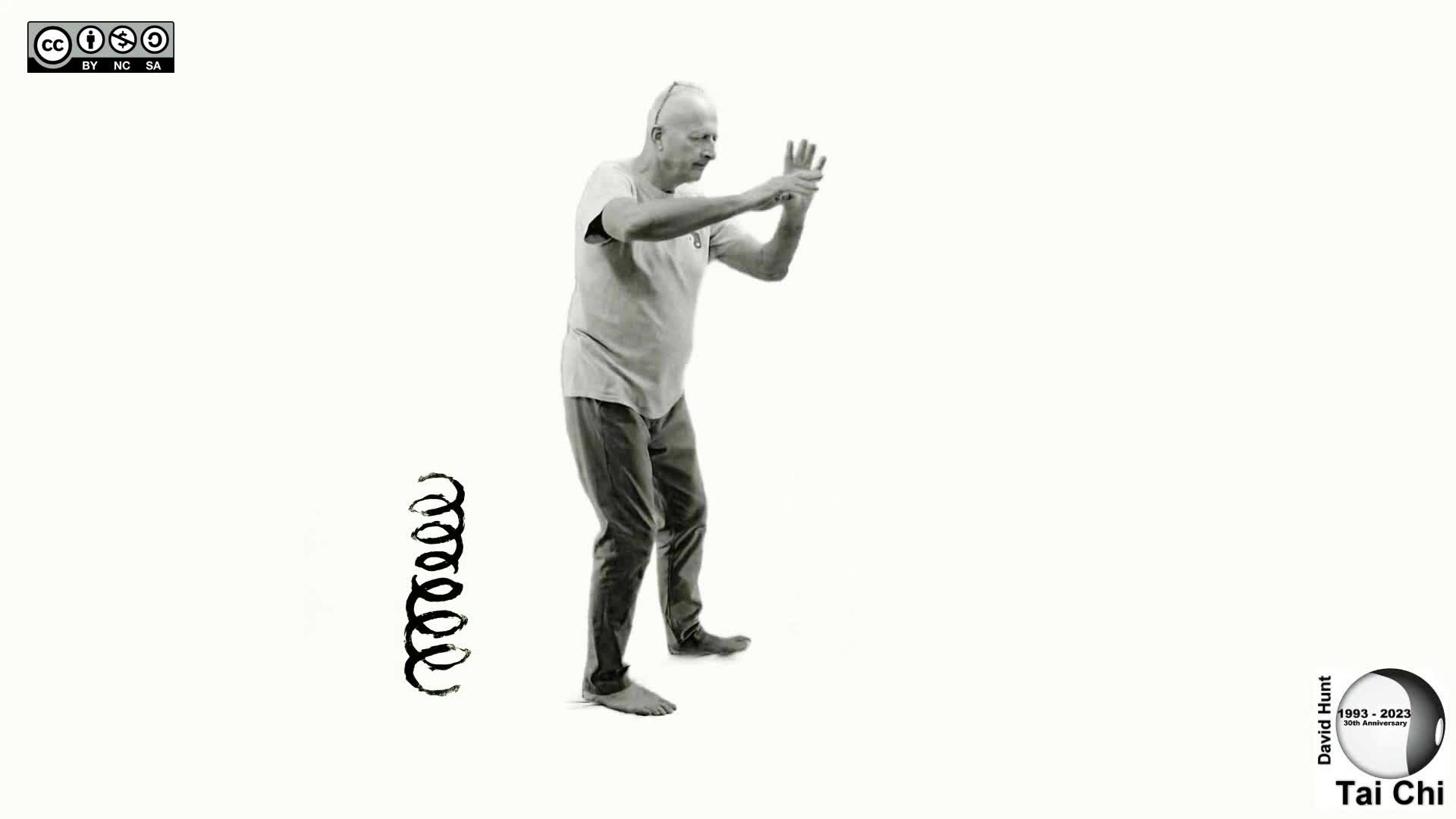
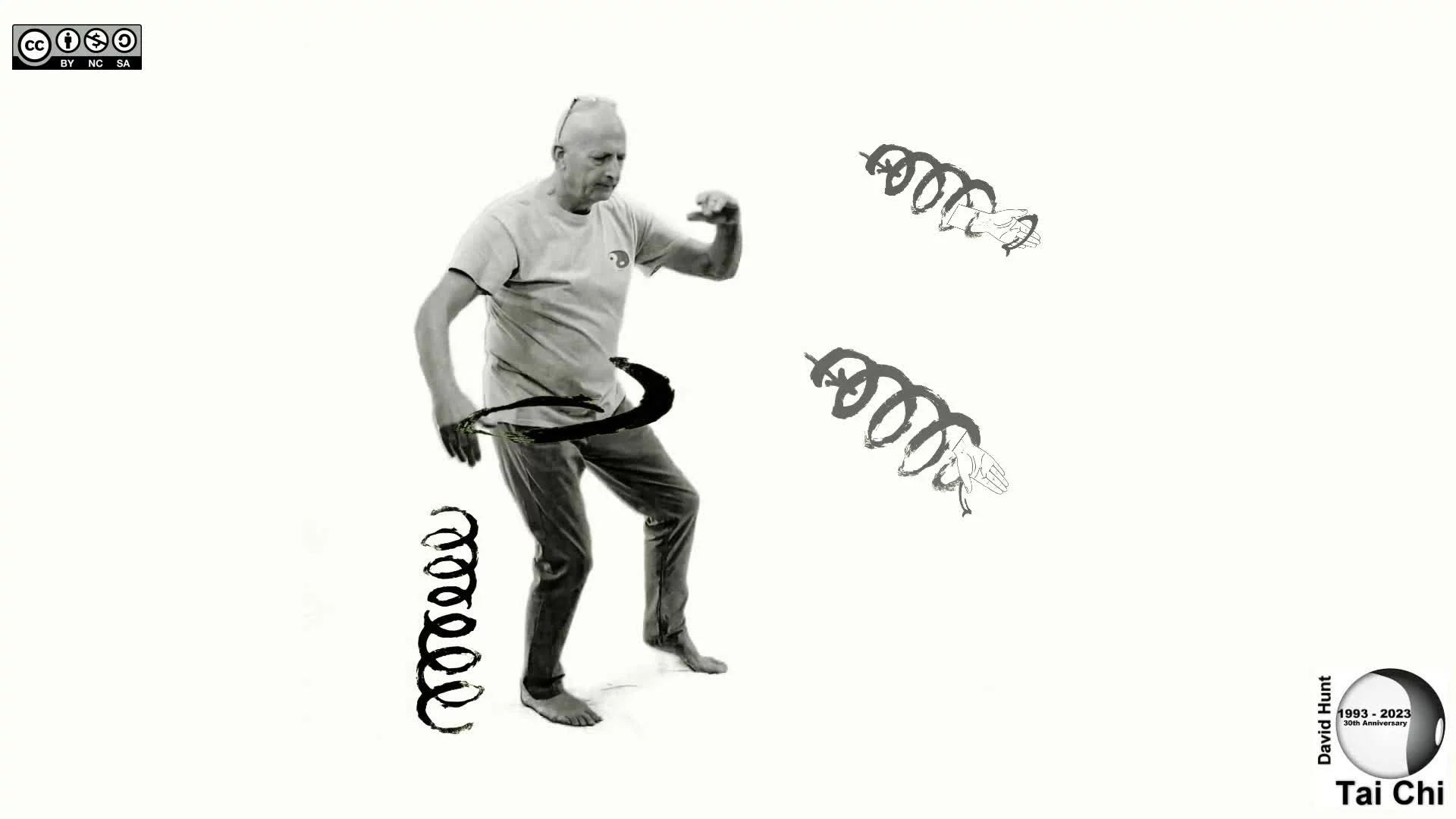
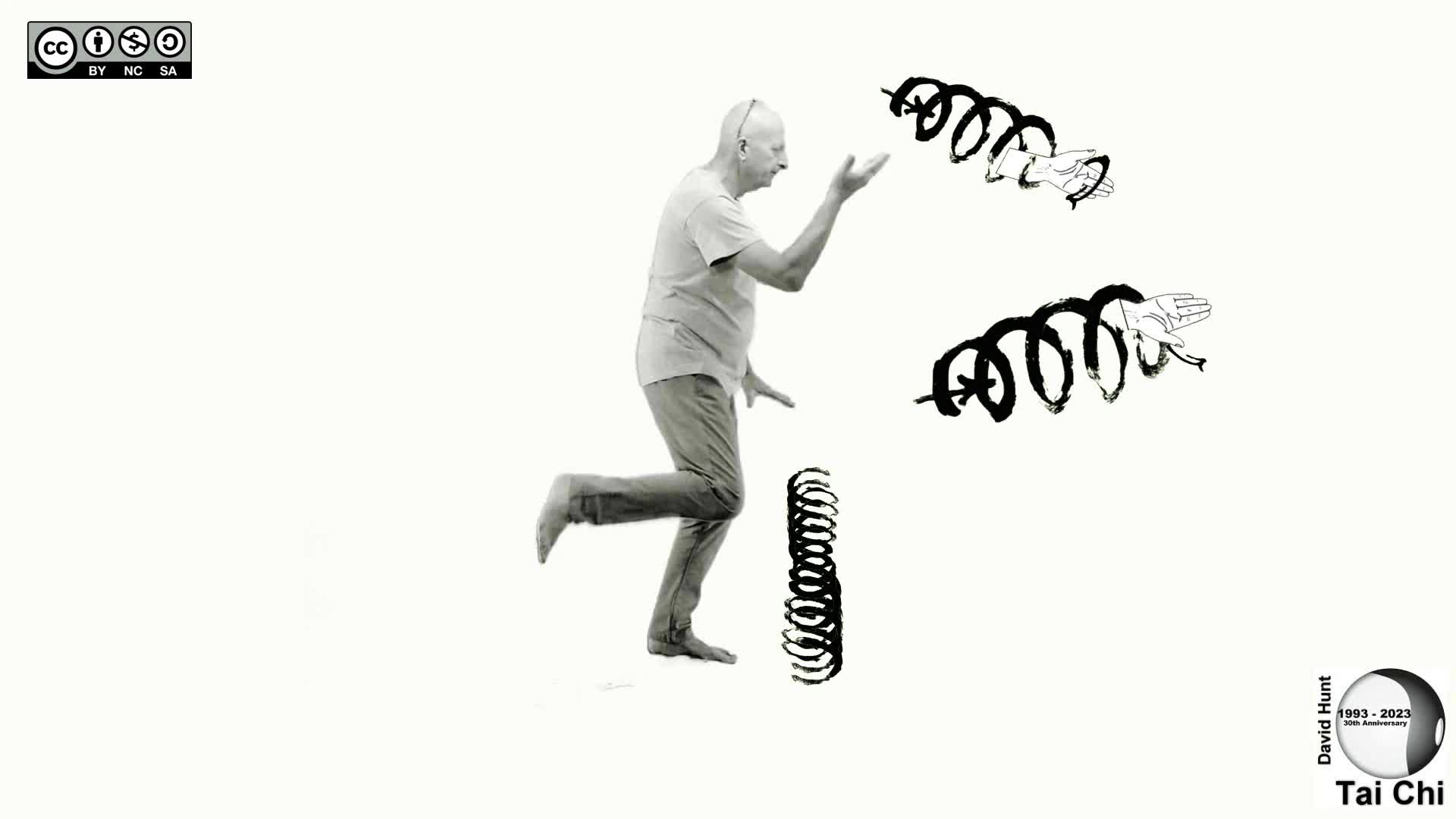
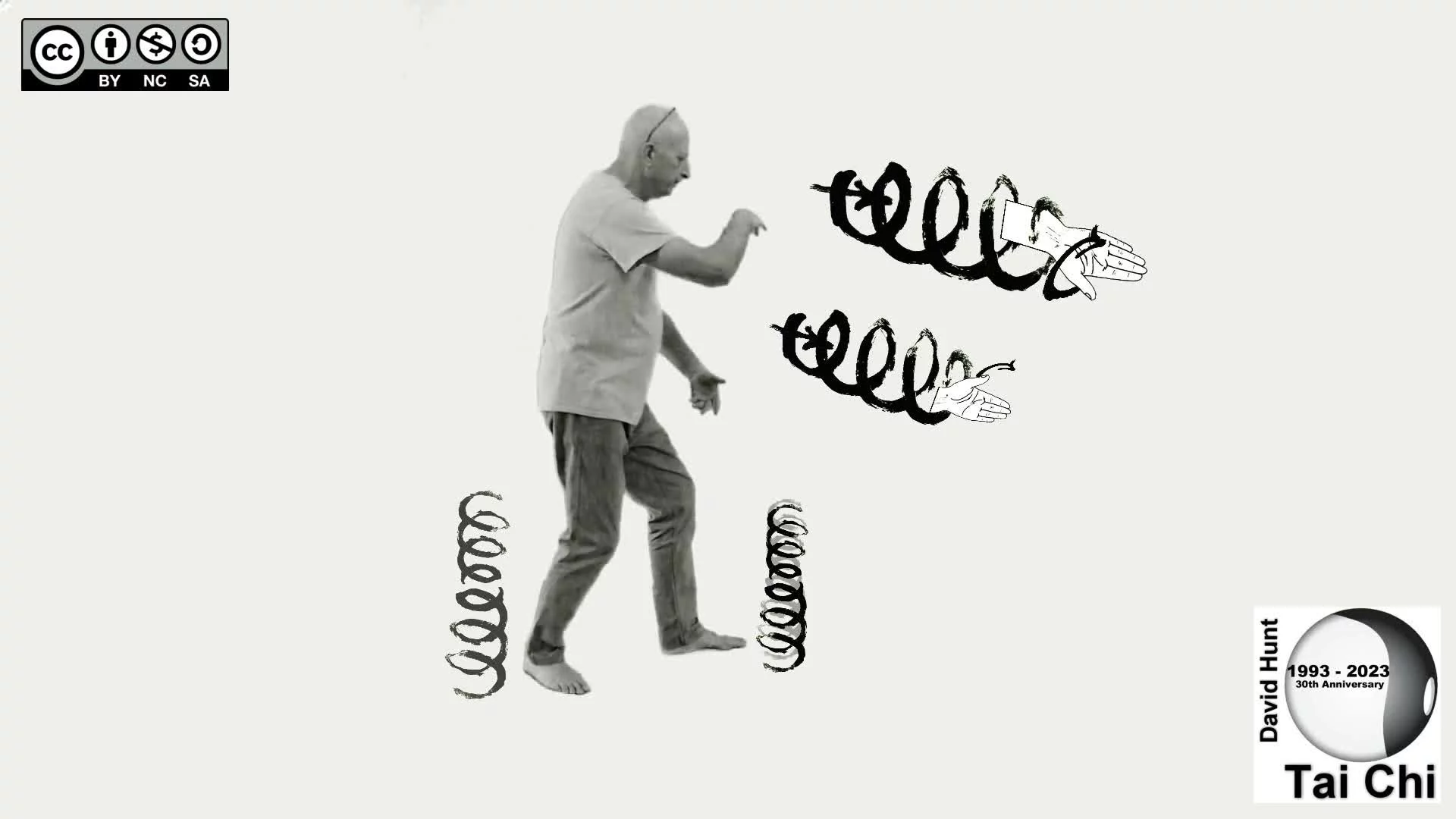
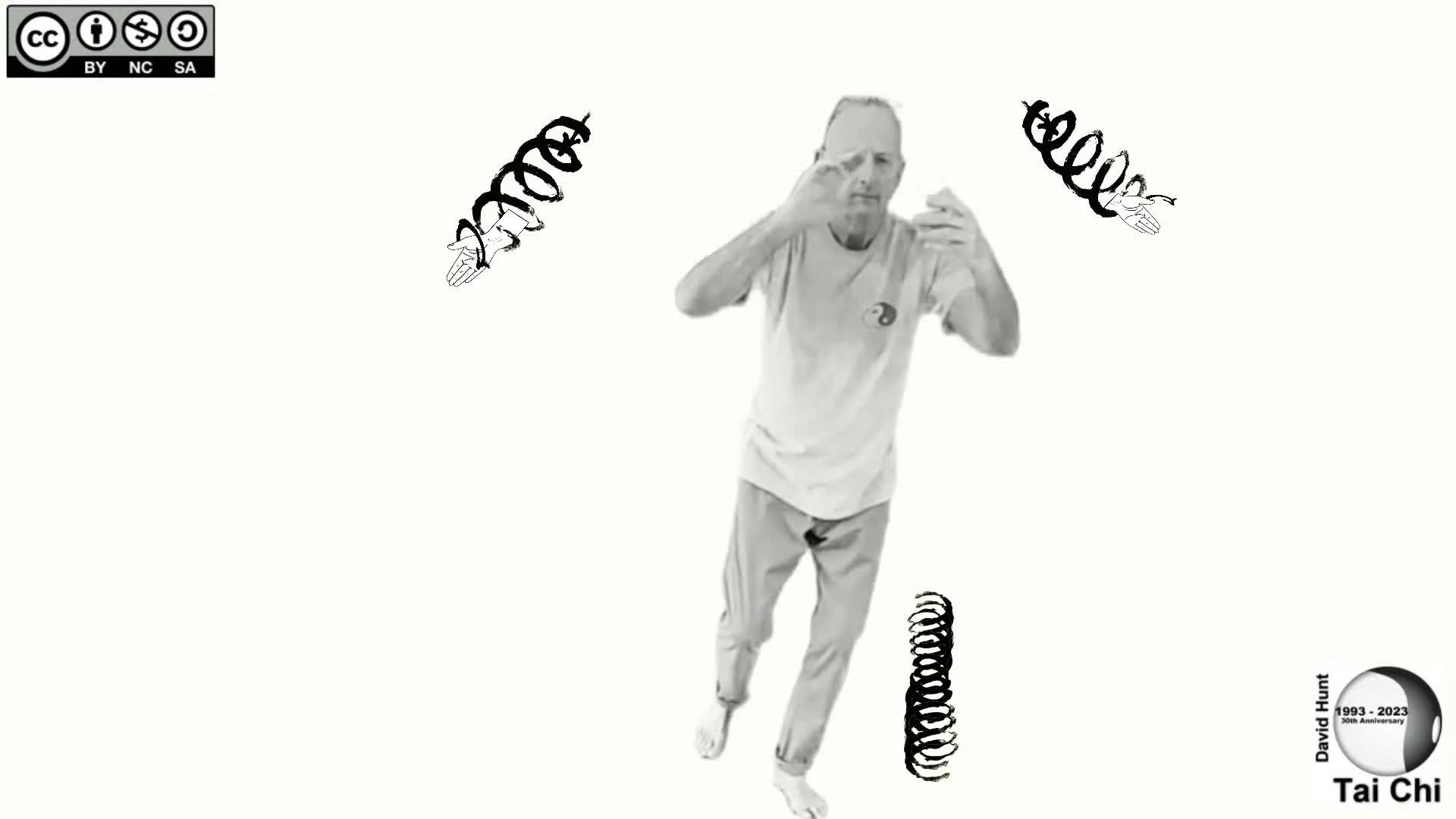
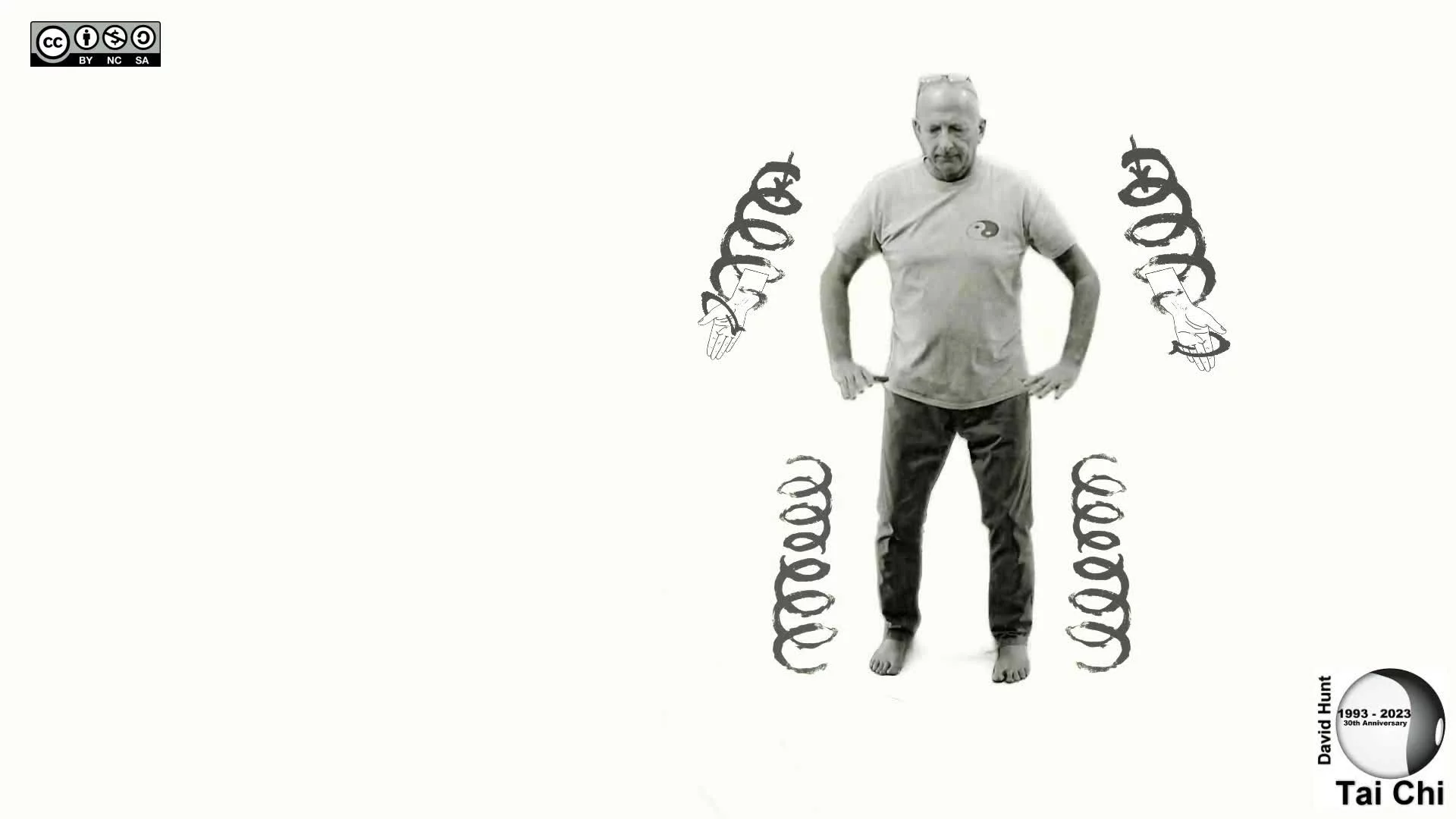
SEQUENCE: Kick and Punch Sequence is repeated 1 time in the form see video 119.
POSTURE: Traditionally first seen as posture number 36 Kick and Punch is also translated as ‘Turn Round and Make A Right Heel’ and includes: Right Heel Kick Yòu dēng jiǎo 右蹬脚, Left Strike Tiger Zuǒ dǎ hǔ shì 左打虎式, Right Strike Tiger Yòu dǎ hǔ shì 右打虎式, Turn Body, Right Heel Kick Huí shēn yòu dēng jiǎo 回身右蹬脚, Twin Fists Strike Ears Shuāng fēng guàn ěr 双峰灌耳, Left Heel Kick Zuǒ dēng jiǎo 左蹬脚 and Turn Body, Right Keel Kick Zhuǎn shēn yòu dēng jiǎo 转身右蹬脚. This sequence follows ‘throw the frisbee’ also called ‘slanting flight’ in ‘Step Up Press Down, Parry and Punch Sequence #3’ and is performed with 10 breaths;
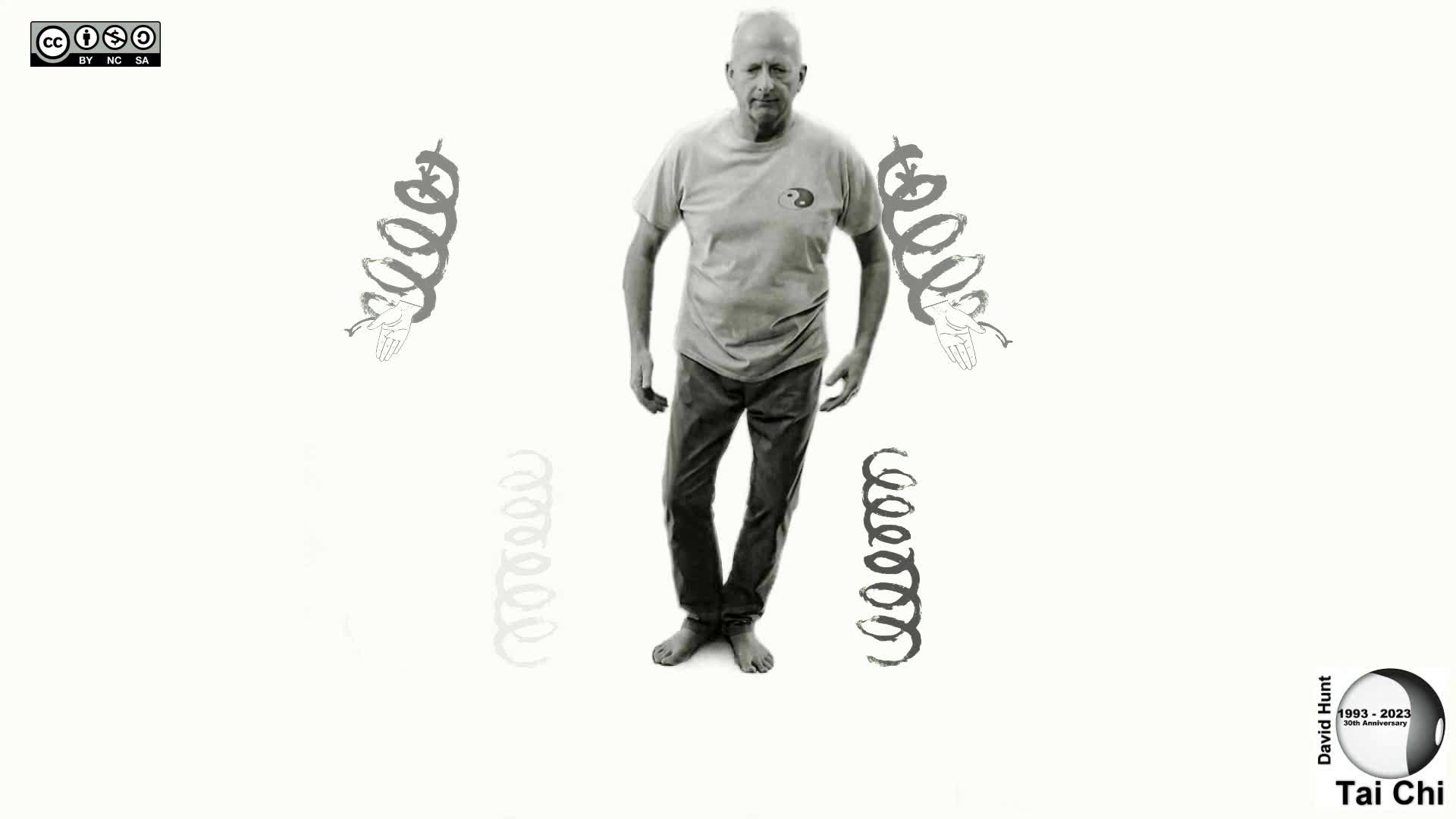
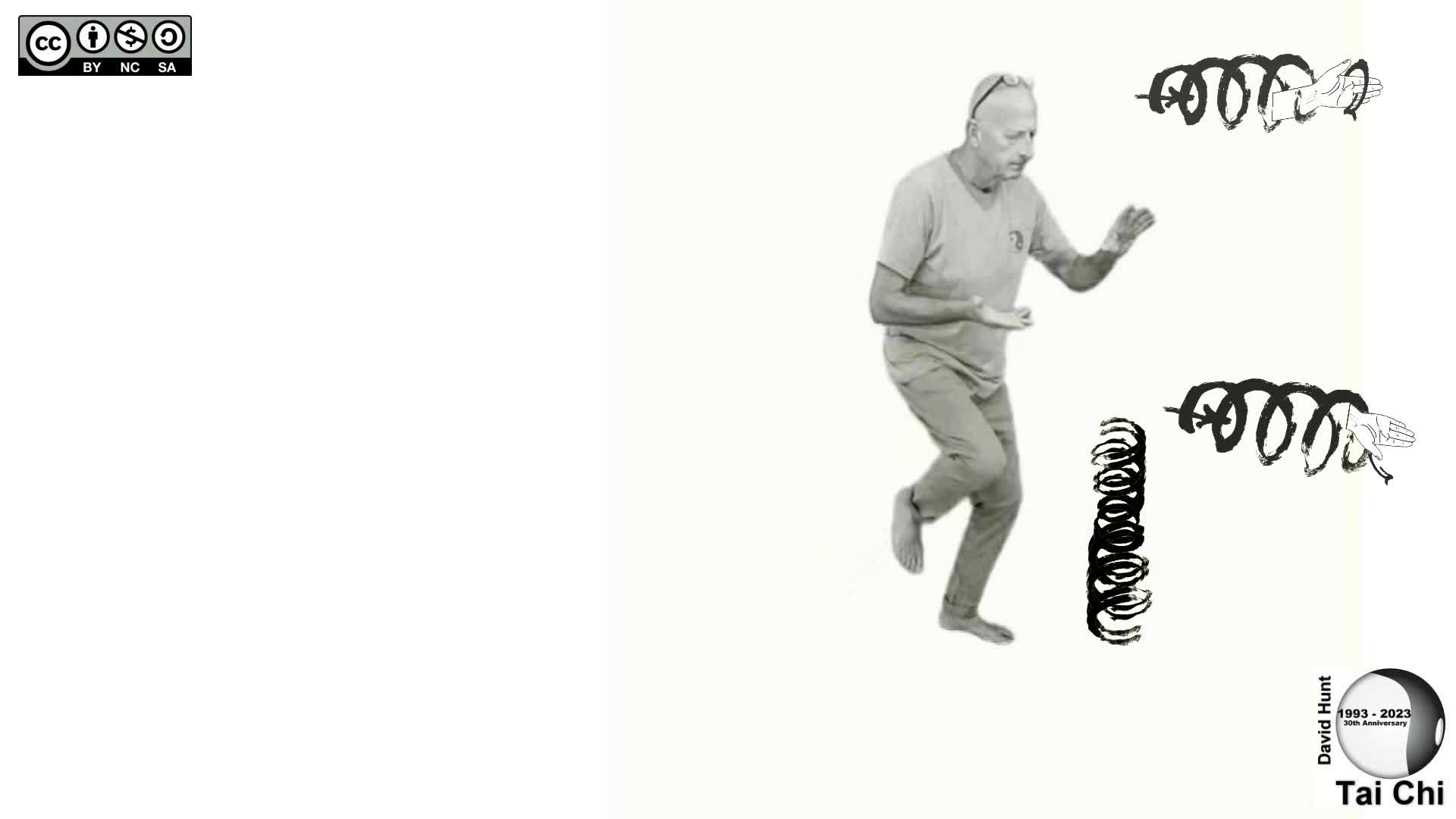
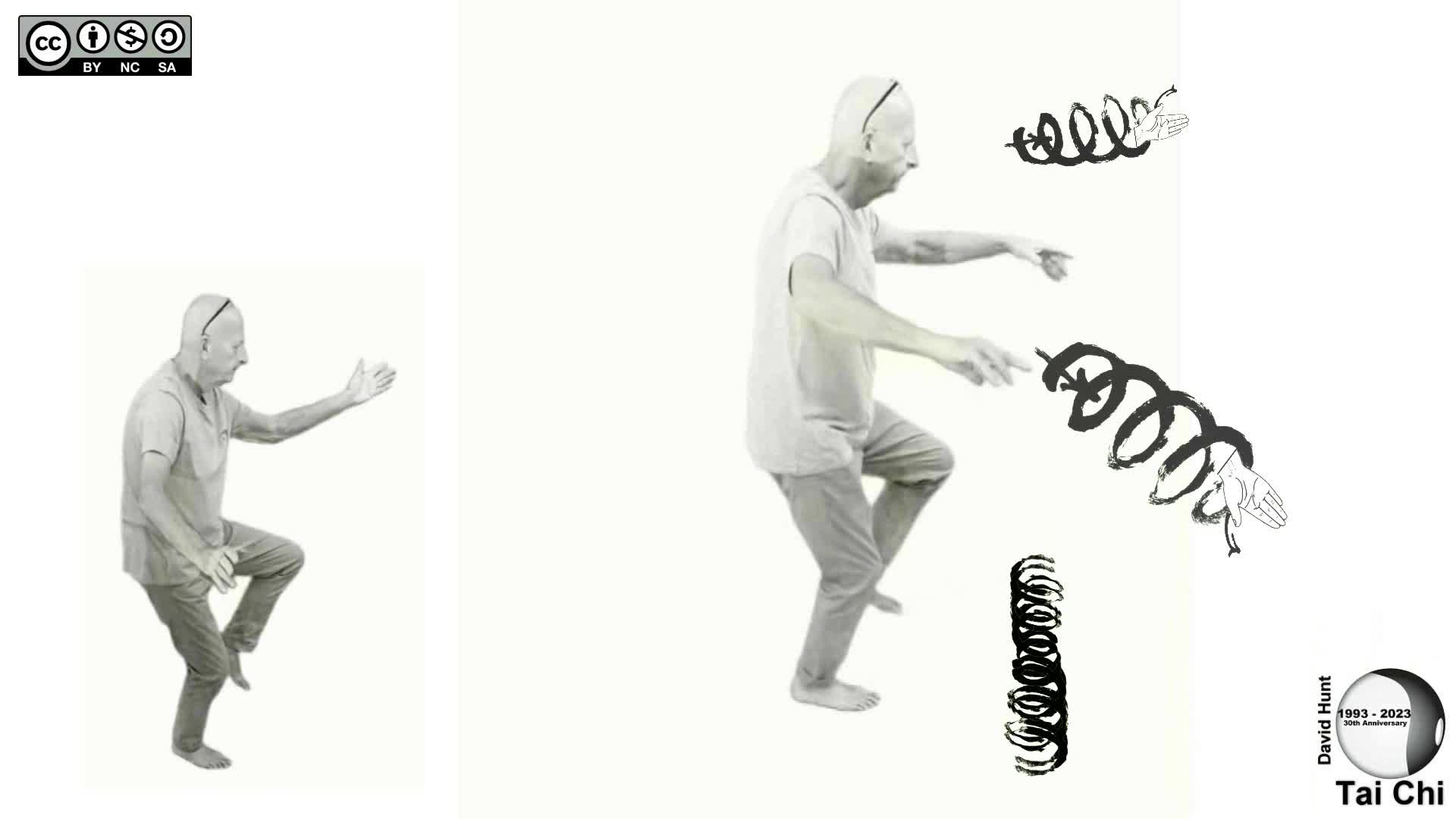
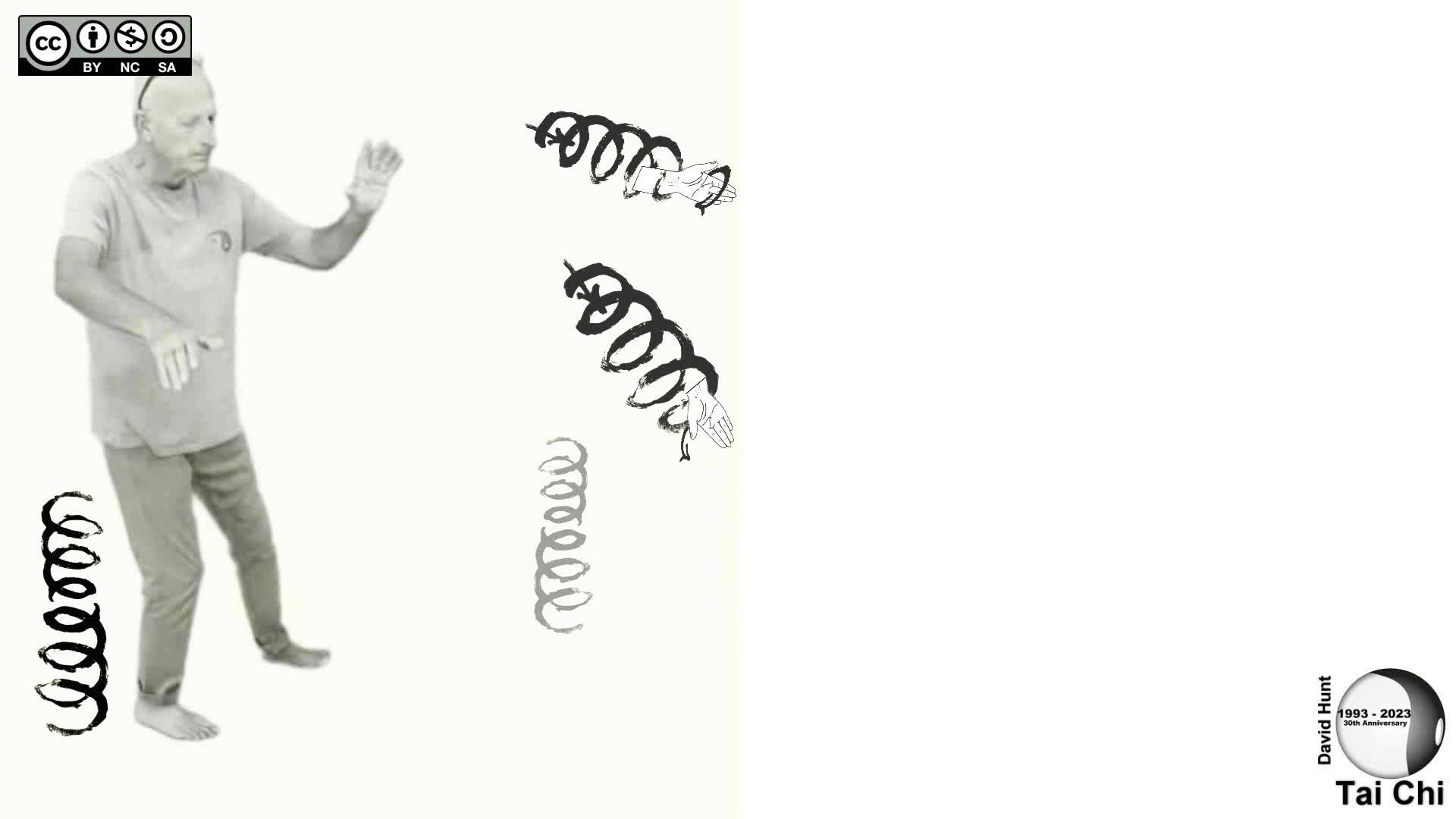
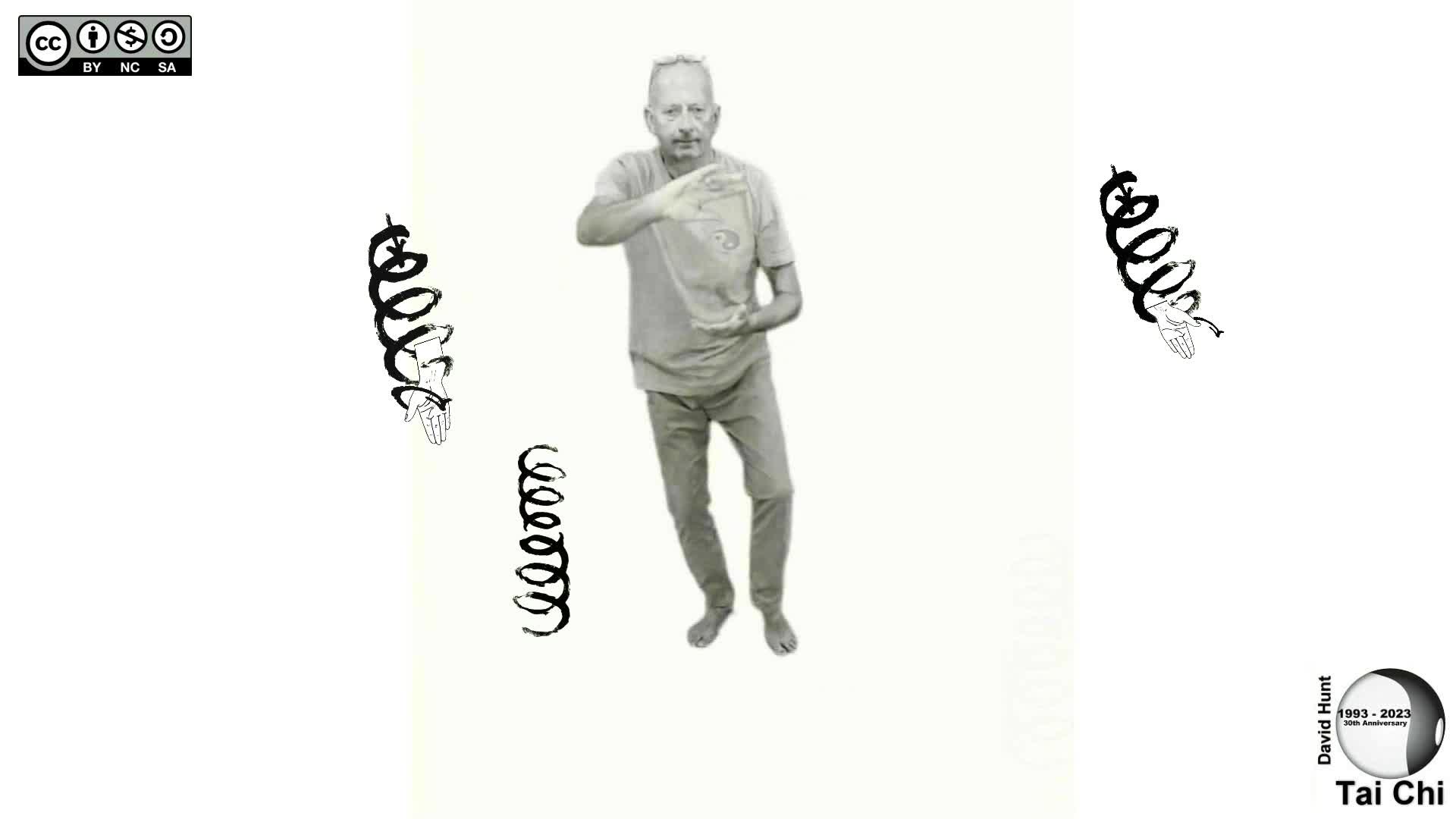
IN BREATH 1: Right Heel Kick Yòu dēng jiǎo 右蹬脚. Let go of all intention and flexing. Move your centre of gravity forward transferring the bouncy springy sensation to the left leg. At the same time the thumb of the right hand turns out rotating the right palm to face up in a ‘scooping’ motion.
Your centre of gravity continues to move forward allowing a flexing or sinking down into the left leg so you can lift the right knee. At the same time the thumbs of both turn outward rotating the palms inward. The right hand floats up while the left hand sinks down until the wrists cross in front of your body left hand closest towards you. When the hands are in the correct position this movement has the sensation of the shoulders flexing forward opening the shoulder blades.
INTENTION: The Embodied Tai Chi soft intention can be thought of as relaxing down as the arms collect up lifting the right knee. The martial application must be applied with compassion and could be applied to capturing an incoming force as you retreat into a defensive posture. The arms act to protect the top half of the body while the raised right knee protects the lower half. The cross lateral action / intention is through the right outer hand and left leg. ROOT: the yin part of Right Heel Kick is associated with lui – Roll Back, Receiving calmly. Here we see a sinking back into the spring of the left leg while the arms circle out receiving or collect up.
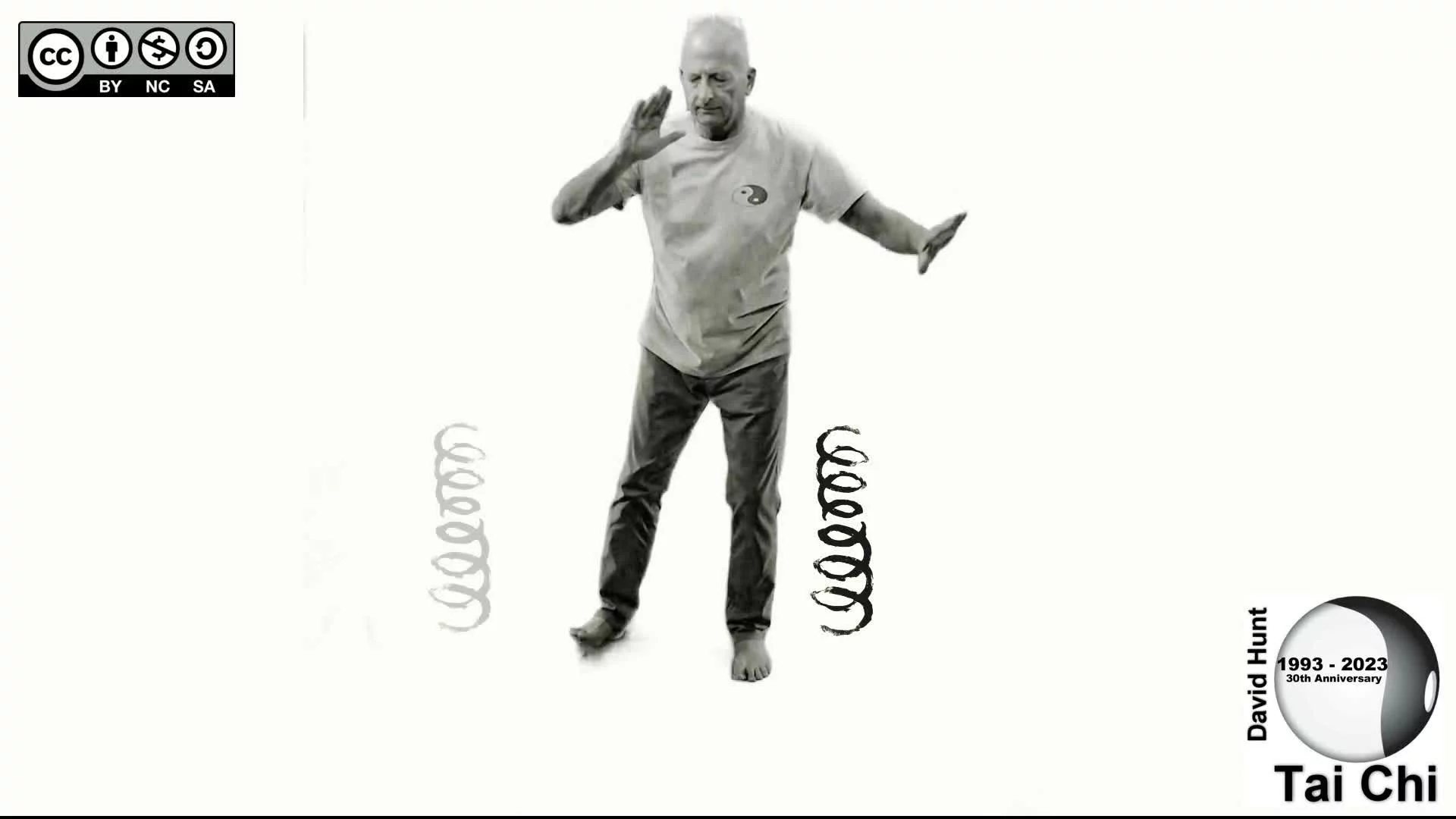
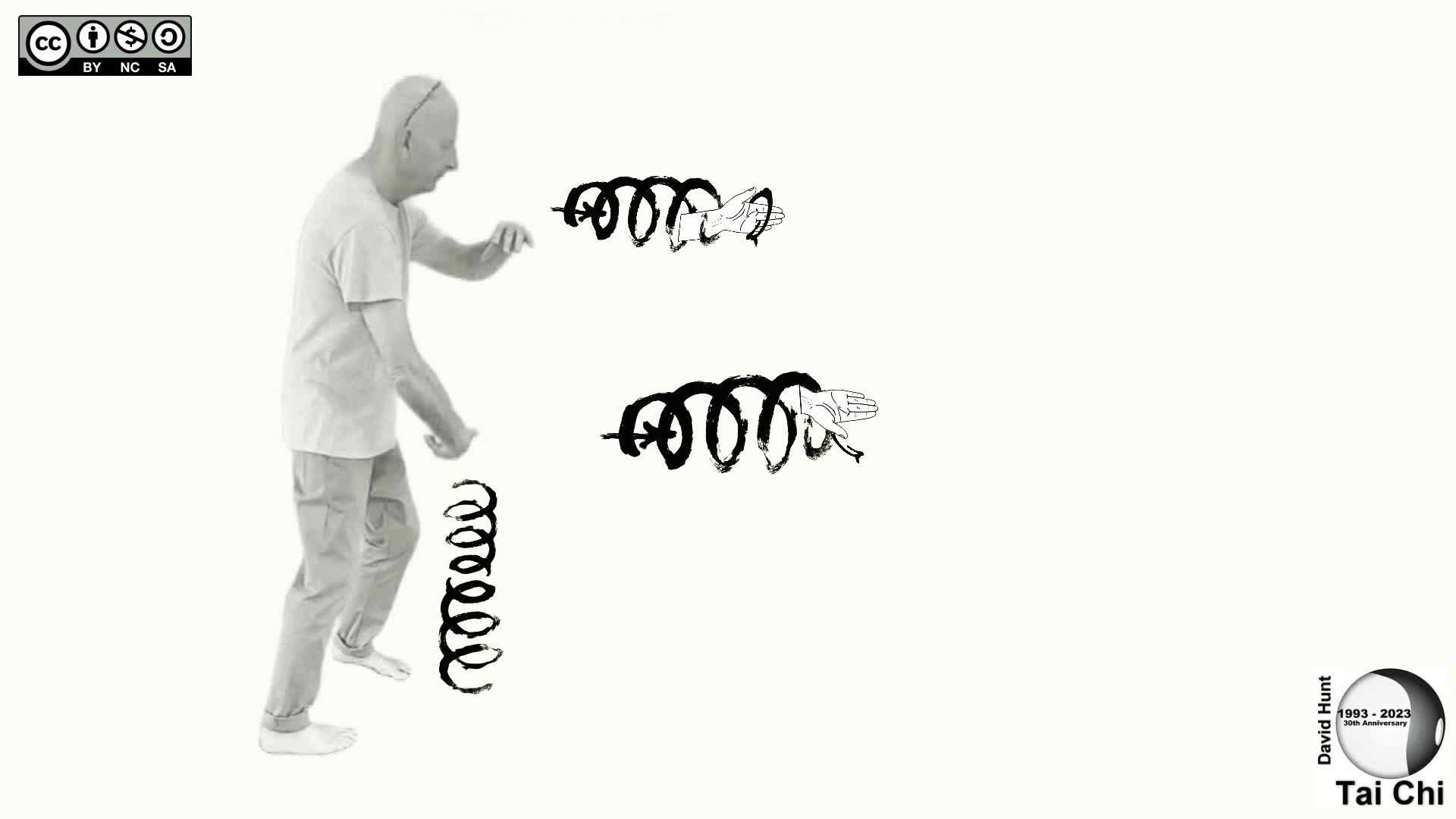
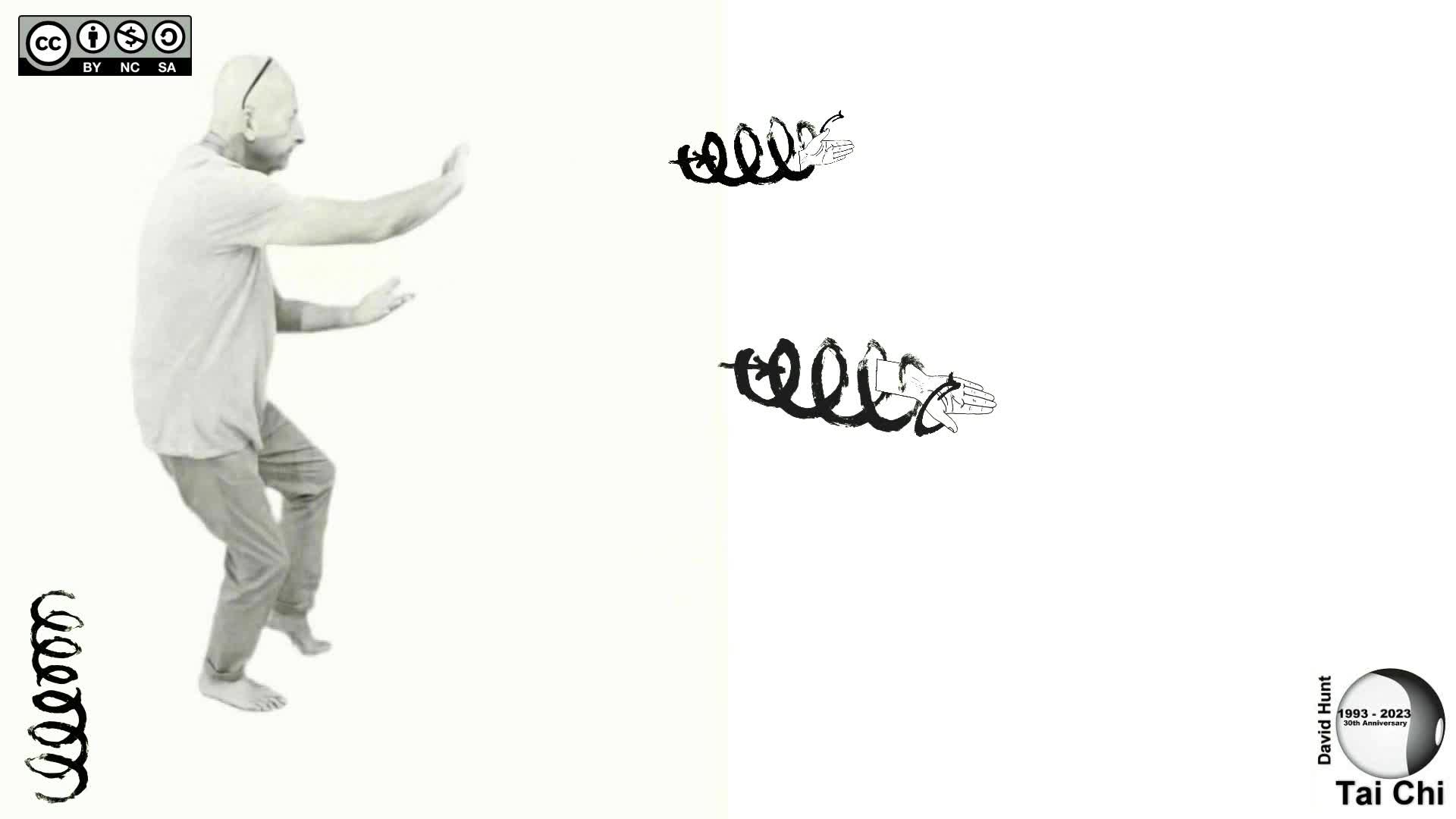
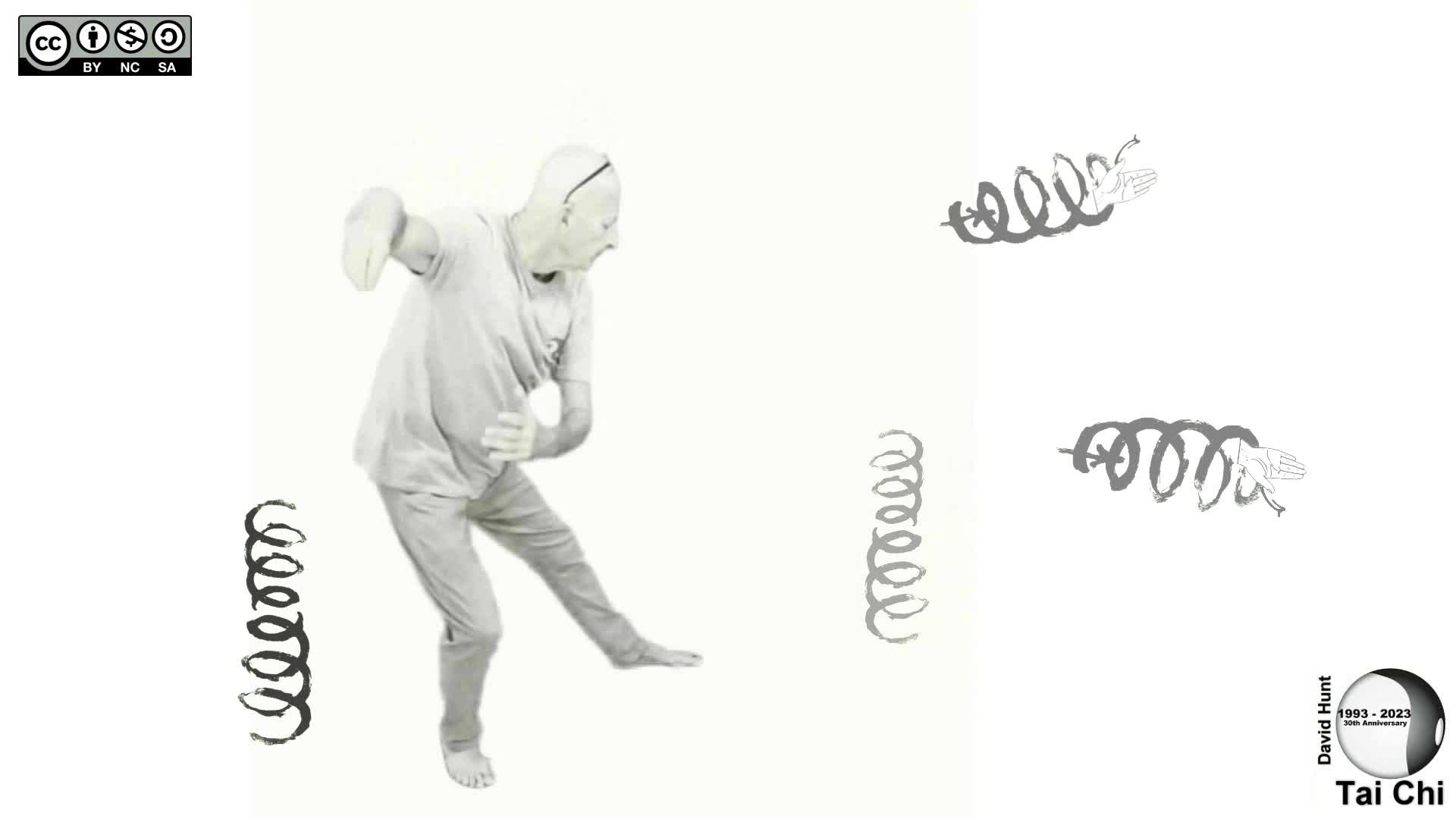
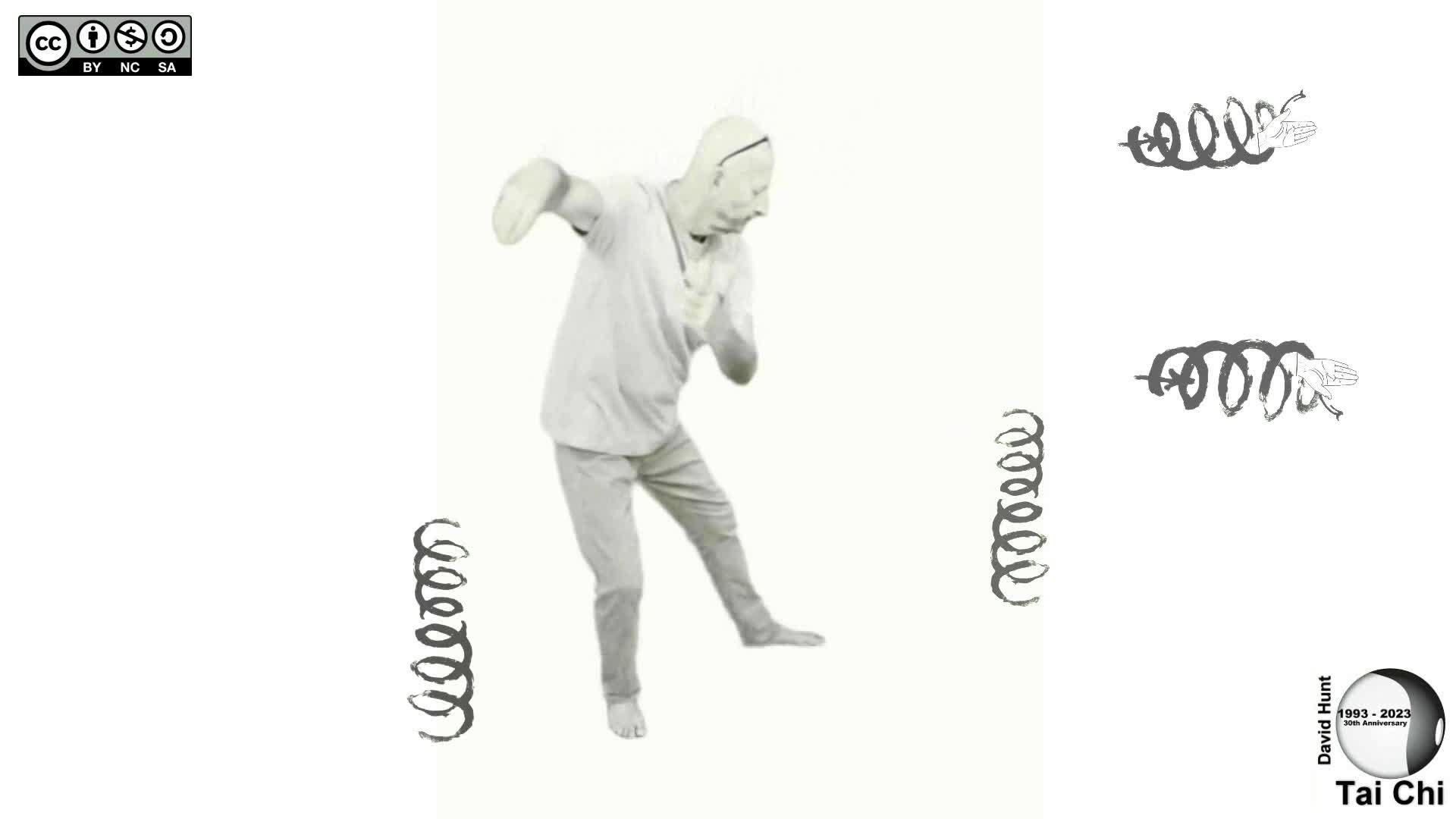
OUT BREATH 1: Let go of all flexing. The heel of the right foot swings forward as the thumbs turn inward rotating palms away from your body and separating the hands as the shoulders flex back. When the hands are in the correct position this movement has the sensation of flexing the shoulders back closing the shoulder blades opening the chest.
INTENTION: The Embodied Tai Chi soft intention can be thought of as a grand opening, the spreading wings of a proud eagle. The martial application must be applied with compassion and would be applied as the opening arms redirecting an incoming force down to extend the right heel. The heel kick should strike at the location the right knee is pointing towards.
The cross lateral action / intension is through the extending right hand and left leg.
ROOT: Right Heel Kick can perhaps be associated with some elements of split the trigram li. However, here the separating is horizontal.
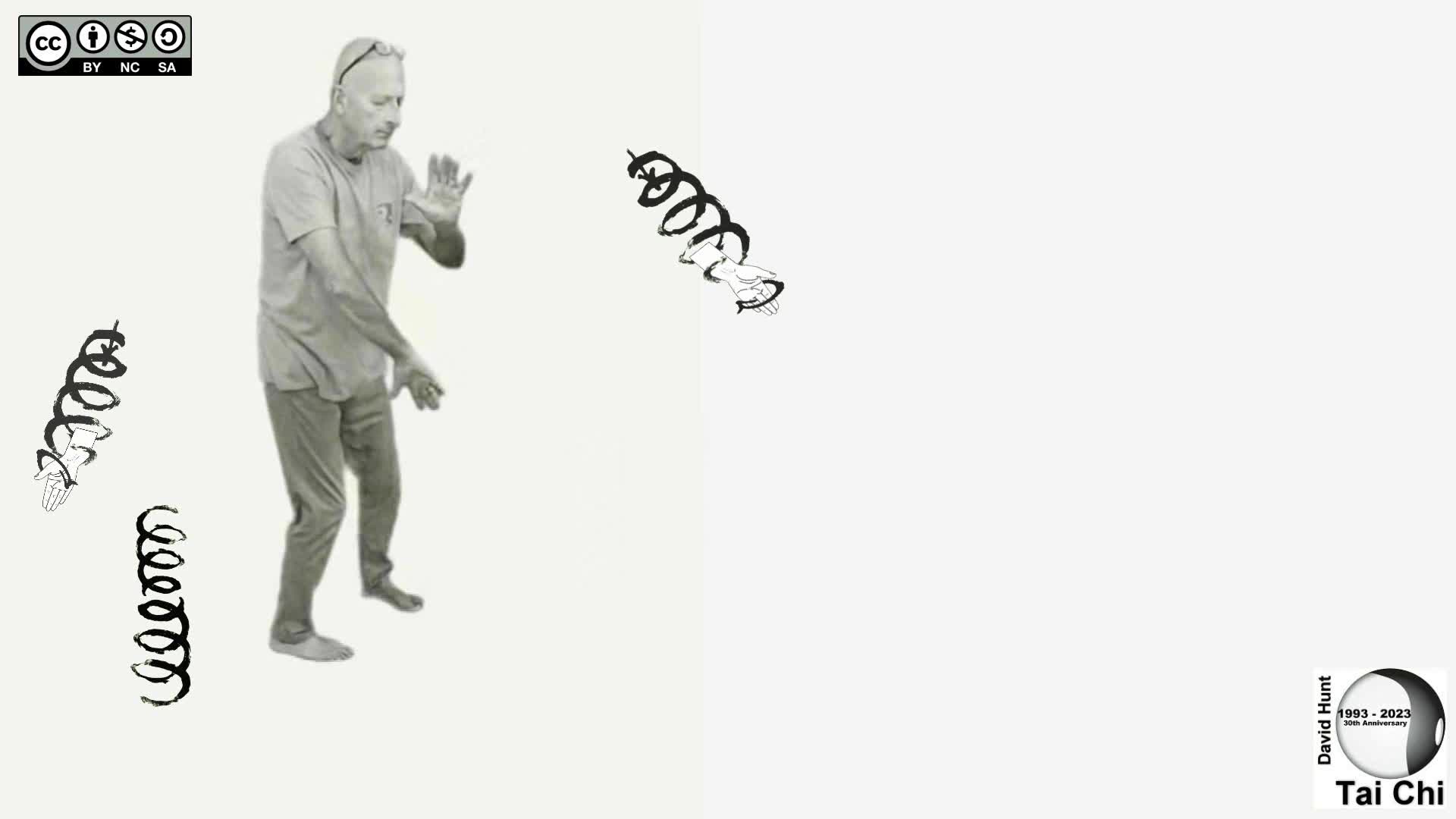
IN BREATH 2: Let go of all intention and flexing. The right heel swings back down as the right hand circles down. The thumbs turn inward rotating the palms to face each other as if holding a large ball. When the hands are in the correct position this movement has the sensation of the shoulders flexing forward opening the shoulder blades.
INTENTION: The cross lateral action / intention is through the right hand and left leg. ROOT: Make a ball to the side is associated with lui receiving calmly.
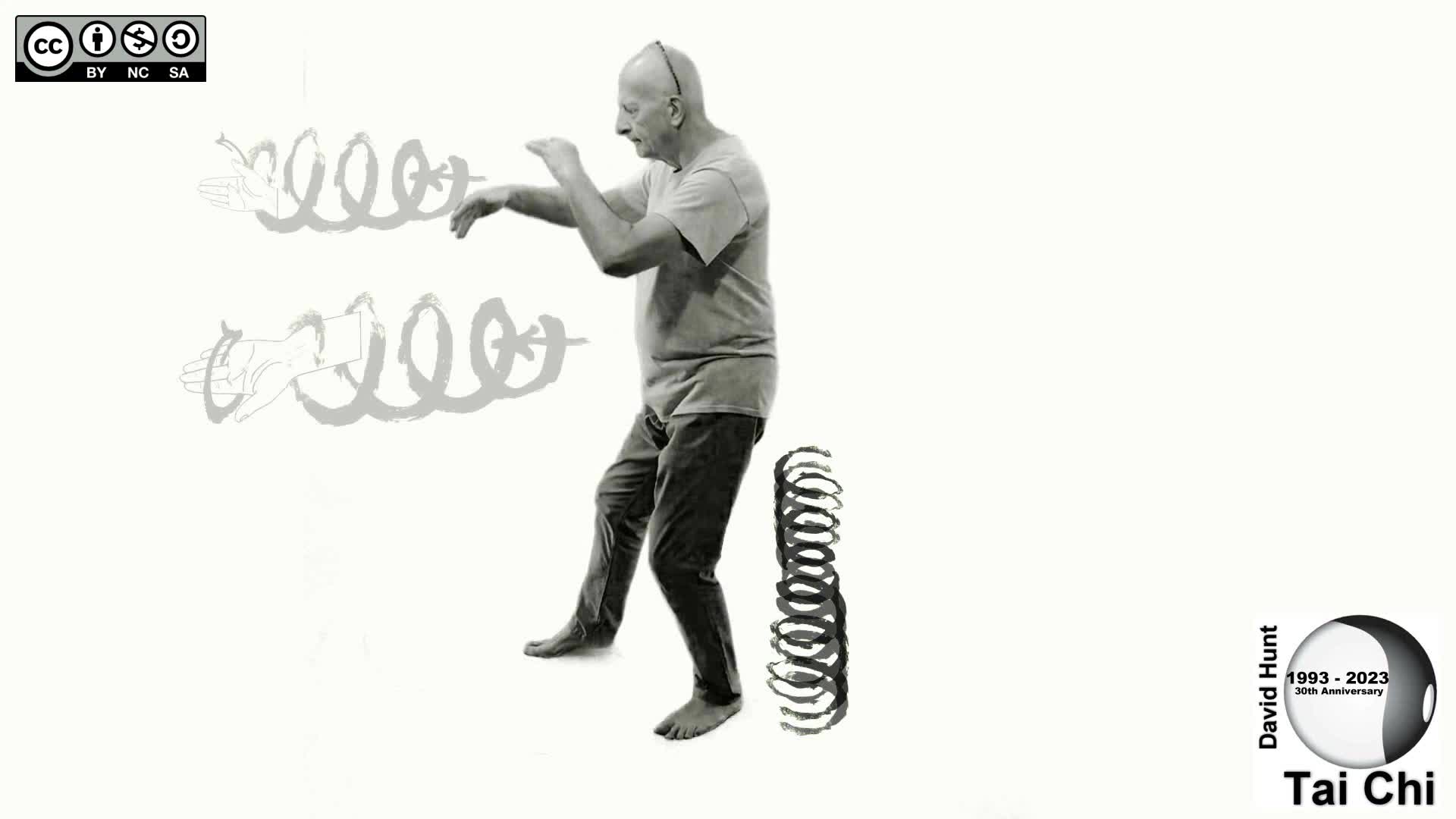
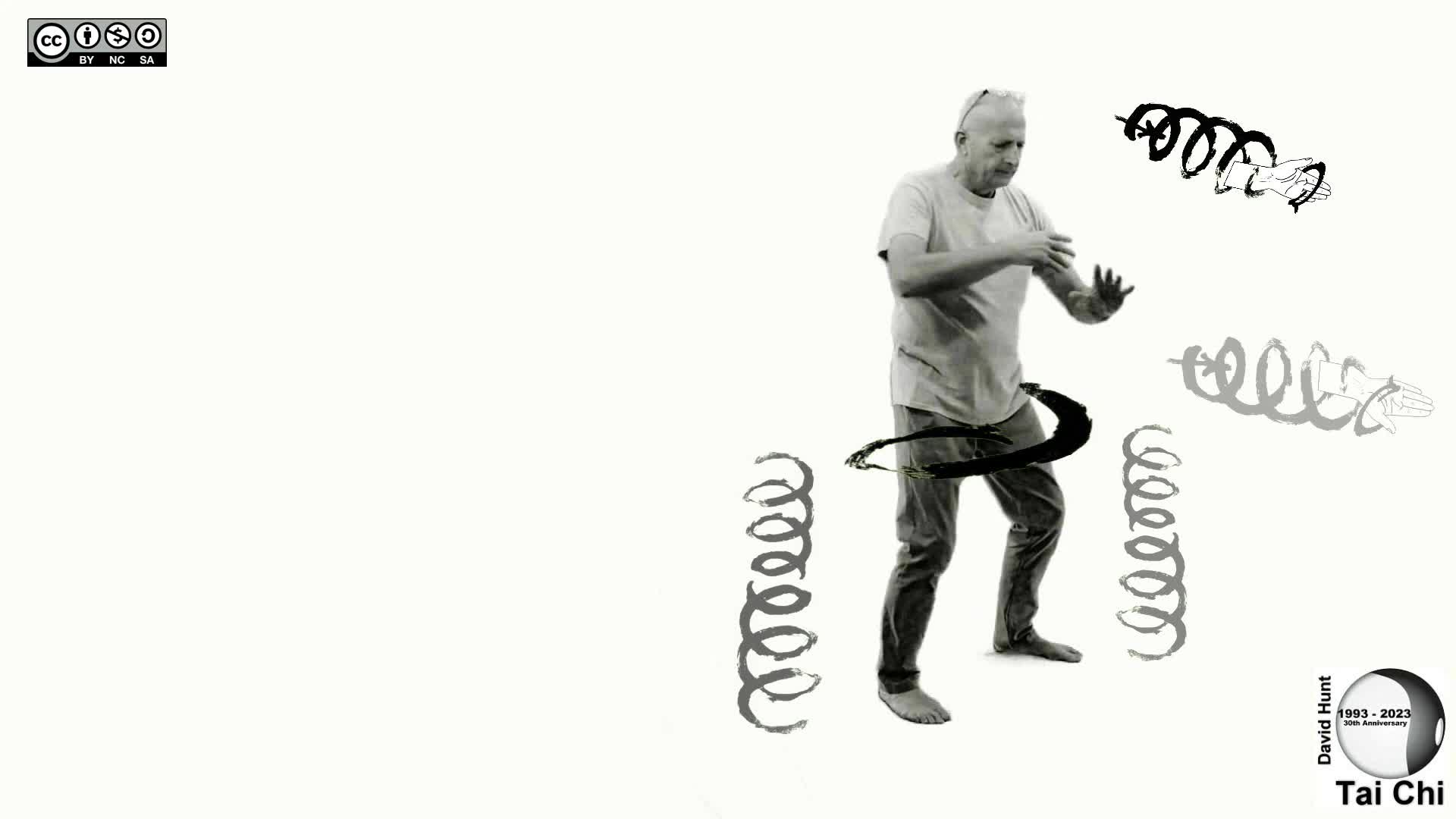
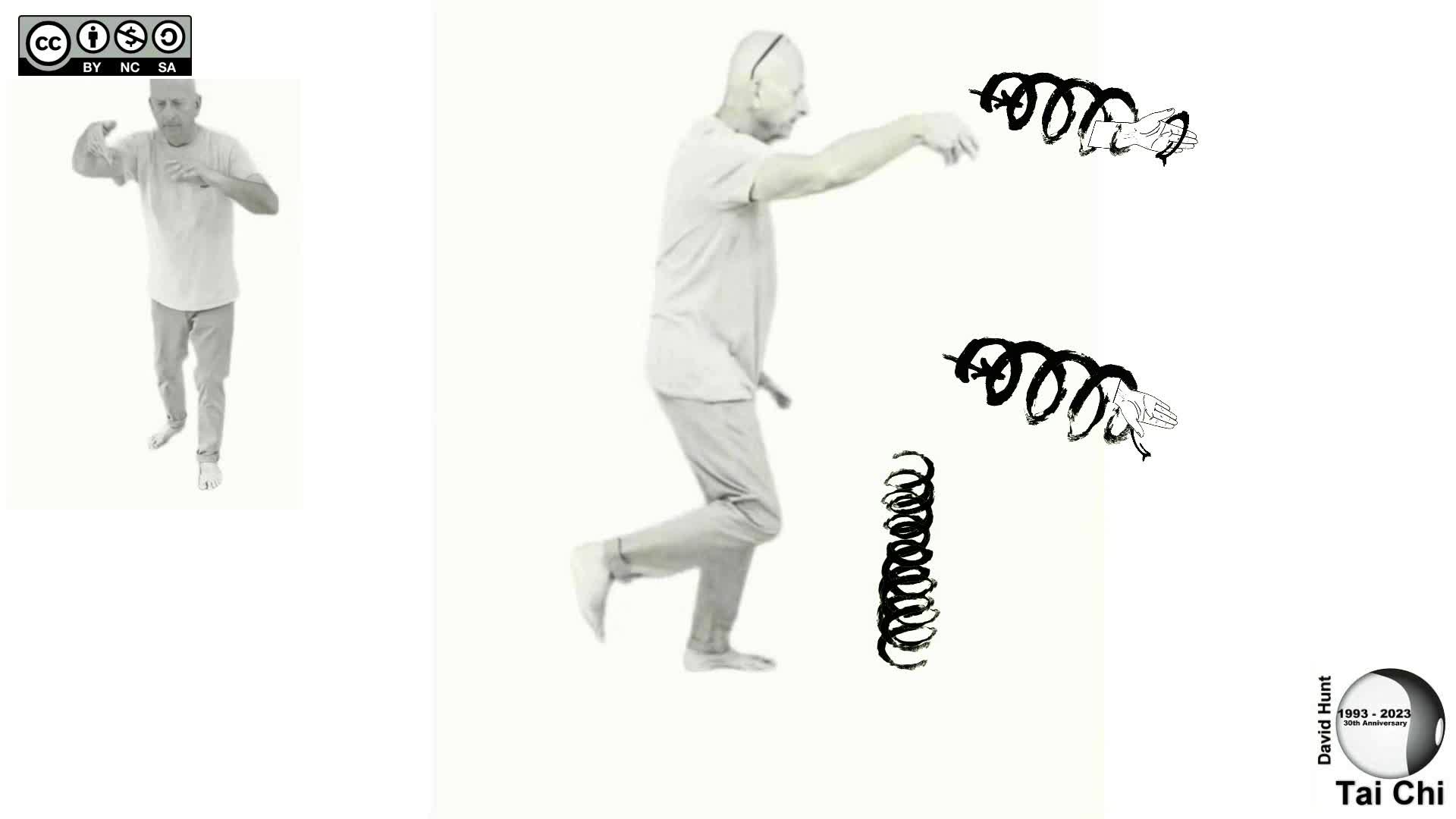
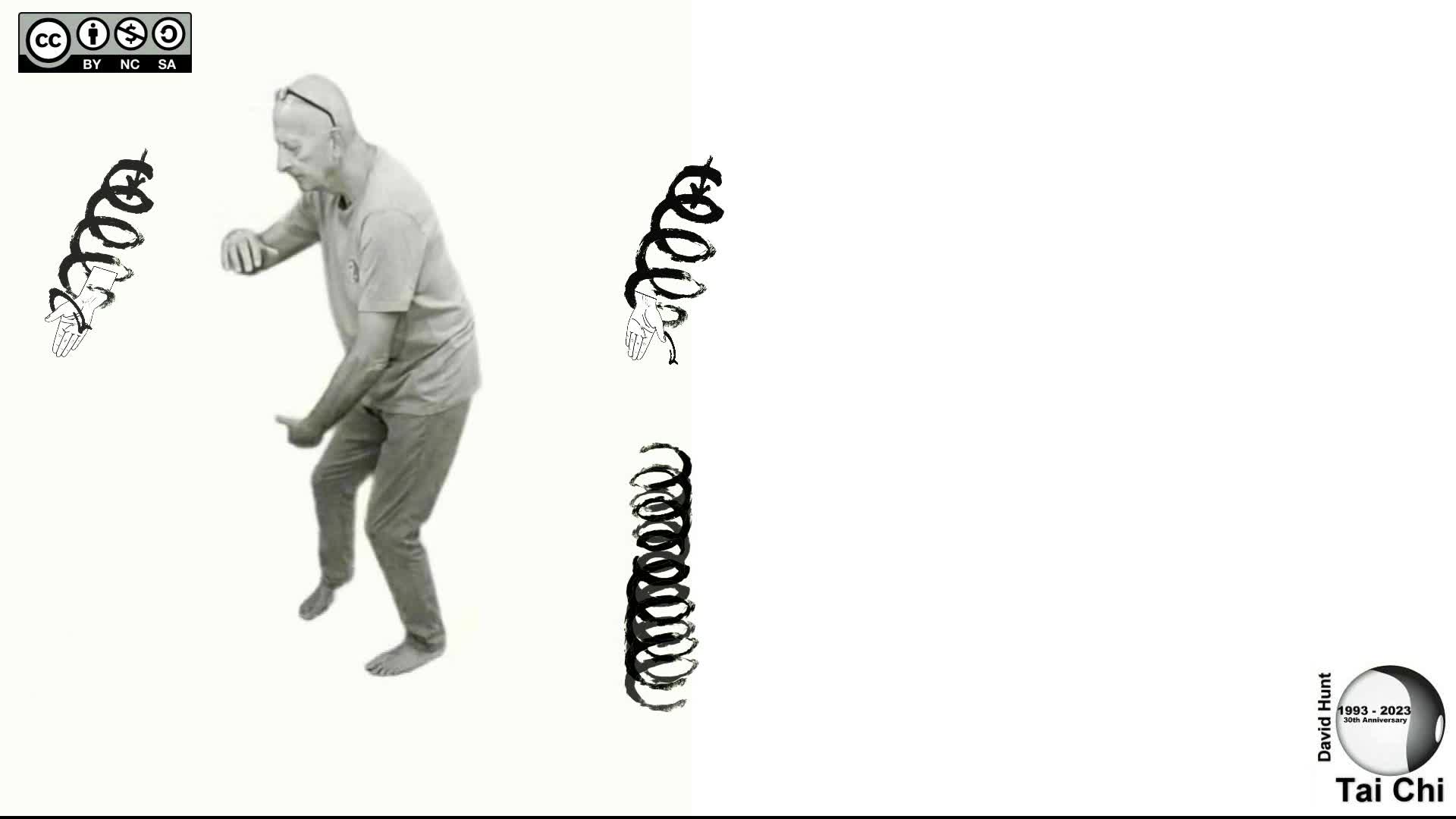
OUT BREATH 2: ‘Lift the Curtains and Press’. Let go of all flexing. Step down towards your front right corner placing your right heel on the ground. Turn the right foot anticlockwise pivoting on the heel. Move your centre of gravity forward transferring the bouncy springy sensation to the right leg. At the same time turn the waist, your centre of gravity (lower ‘dāntián 丹田’) clockwise allowing a flexing or sinking down into the right leg. The turning waist turns the shoulders while the thumbs of both hands turn inward rotating the palms of the hands away. The right forearm is flexed up in a lifting motion as the left hand lifts to press away to your front. When the hands are in the correct position this movement has the sensation of flexing the shoulders back closing the shoulder blades opening the chest.
INTENTION: The Embodied Tai Chi soft intention can be thought of as lifting a curtain with the upward rotation of the right forearm so the left hand can press past to open a window. The martial application must be applied with compassion and would be applied as a block and strike. The cross lateral action / intension is through the left hand and right leg. ROOT: In Lift the Curtains and Press we may see an association with a number of trigrams. When stepping down leading with the right shoulder, it is important to not lean forward, do not overstep but rather move your centre of gravity seeking the upright central equilibrium of ko being solid and stable like a mountain. Then your turning centre of gravity lifts the right forearm hiding the following left hand push. This flowing deceptive movement can be associated with the element WATER.
The turning centre of gravity lifting the right forearm has aspects of the trigram peng HEAVEN, Upward slanting Ward Off right. However, intention is with the left hand pushing through associated with the trigram an Push,
upward raising along with the element FIRE.
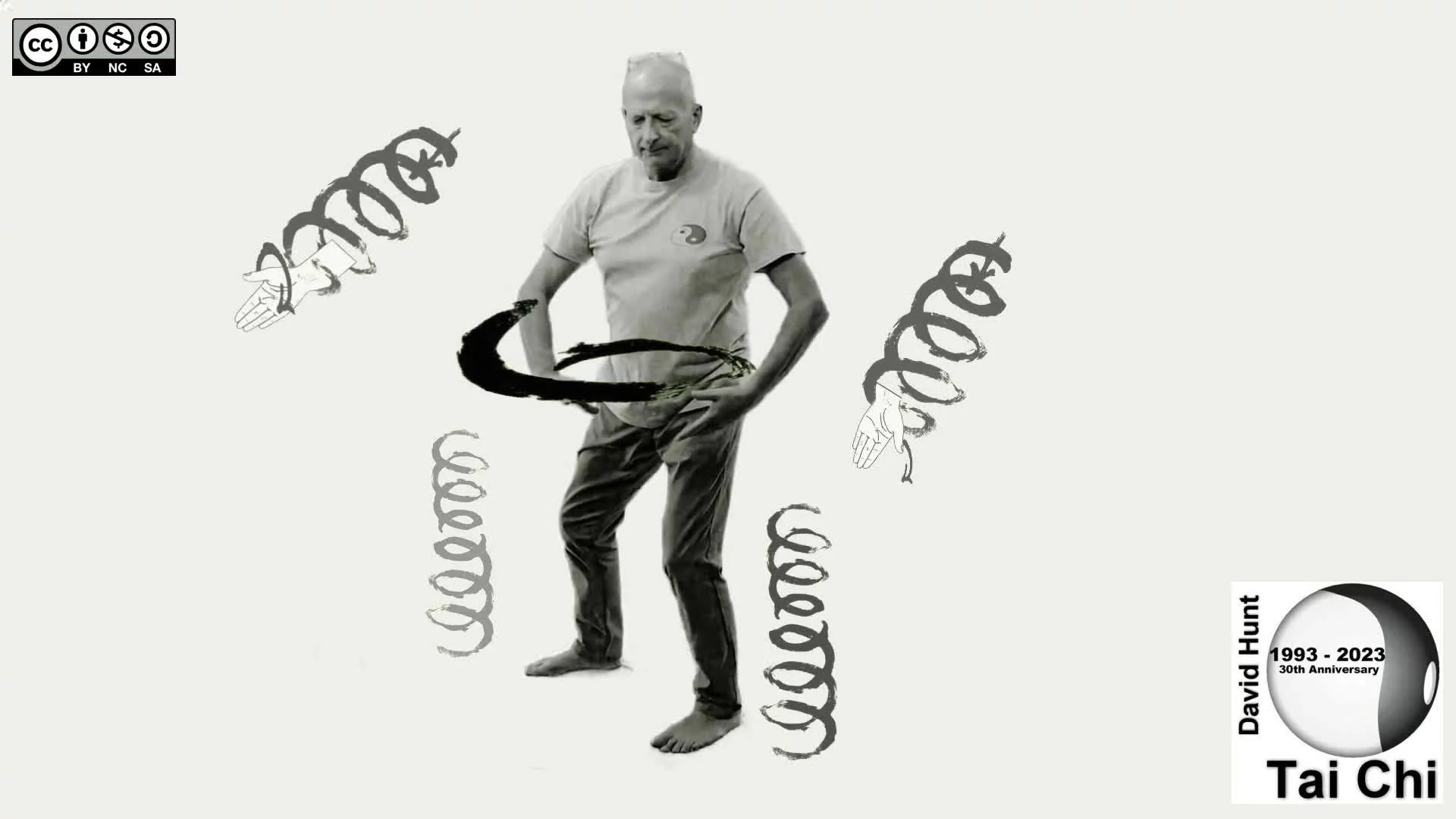
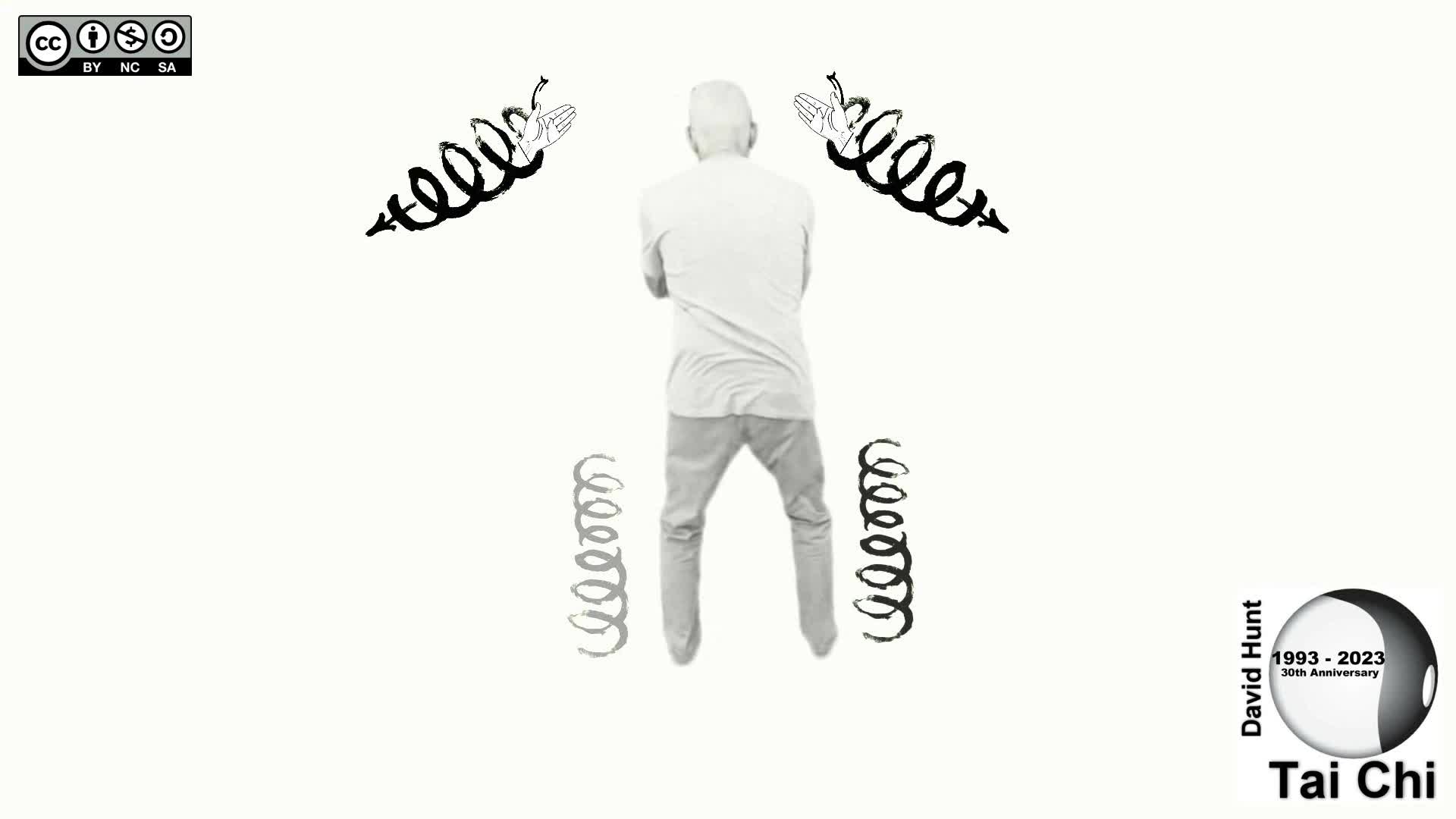
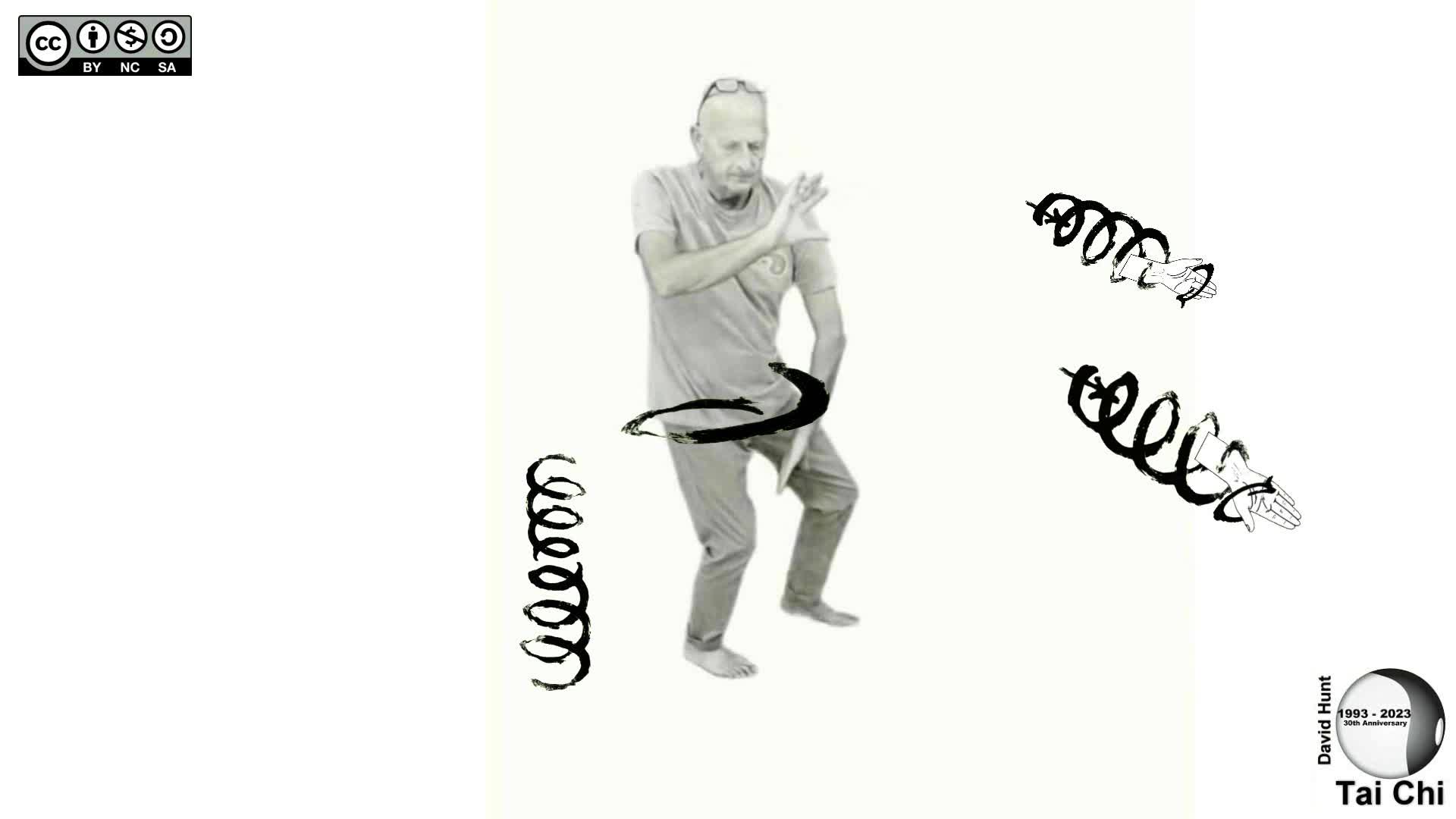
IN BREATH 3: Left Strike Tiger Zuǒ dǎ hǔ shì 左打虎式 traditionally posture 37 also called Punch Tiger or Offset Punch. Let go of all intention and flexing. The hands sink down towards the waist and the thumbs of both hands turn outwards rotating the palms to face each other as if holding a ball. When the hands feel as if they are WITH your centre of gravity (lower ‘dāntián 丹田’) turn the waist anticlockwise. The turning centre of gravity allows a flexing or sinking down into the right leg drawing the left foot back so only the toes touch the ground. When the hands are in the correct position this movement has the sensation of the shoulders flexing forward opening the shoulder blades.
INTENTION: The Embodied Tai Chi soft intention can be thought of as bringing a ball down from in front of your face to rest at your abdomen. The martial application must be applied with compassion and would be applied a sinking down neutralising action. The cross lateral action / intention is through the left hand and right leg. ROOT: The yin sitting back part of Offset Punch is associated with the trigram lui with the supporting leg flexing into its spring. Here ‘receiving calmly’ is associated with the EARTH element as the supporting leg and foot softly connect with the ground.
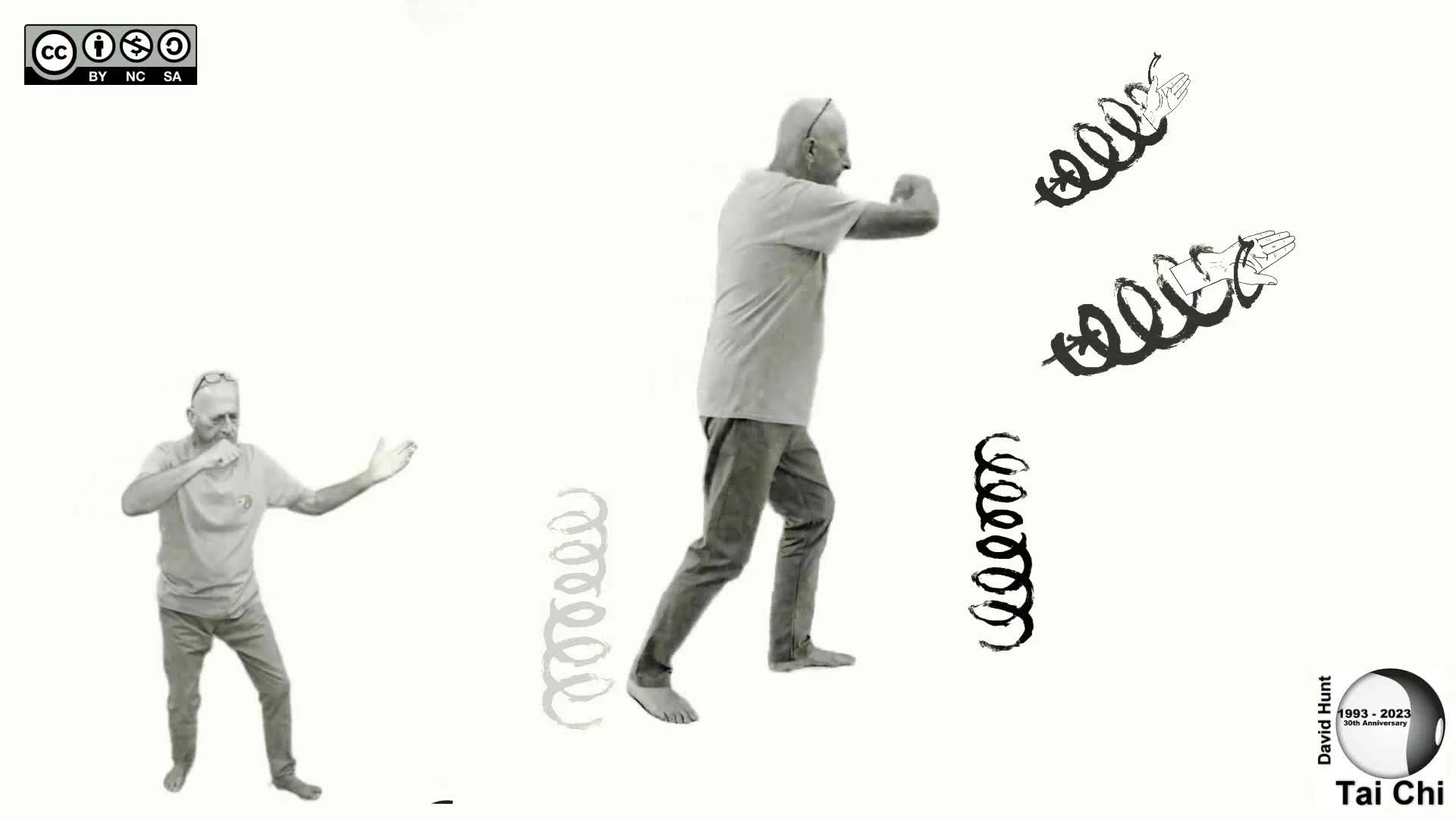
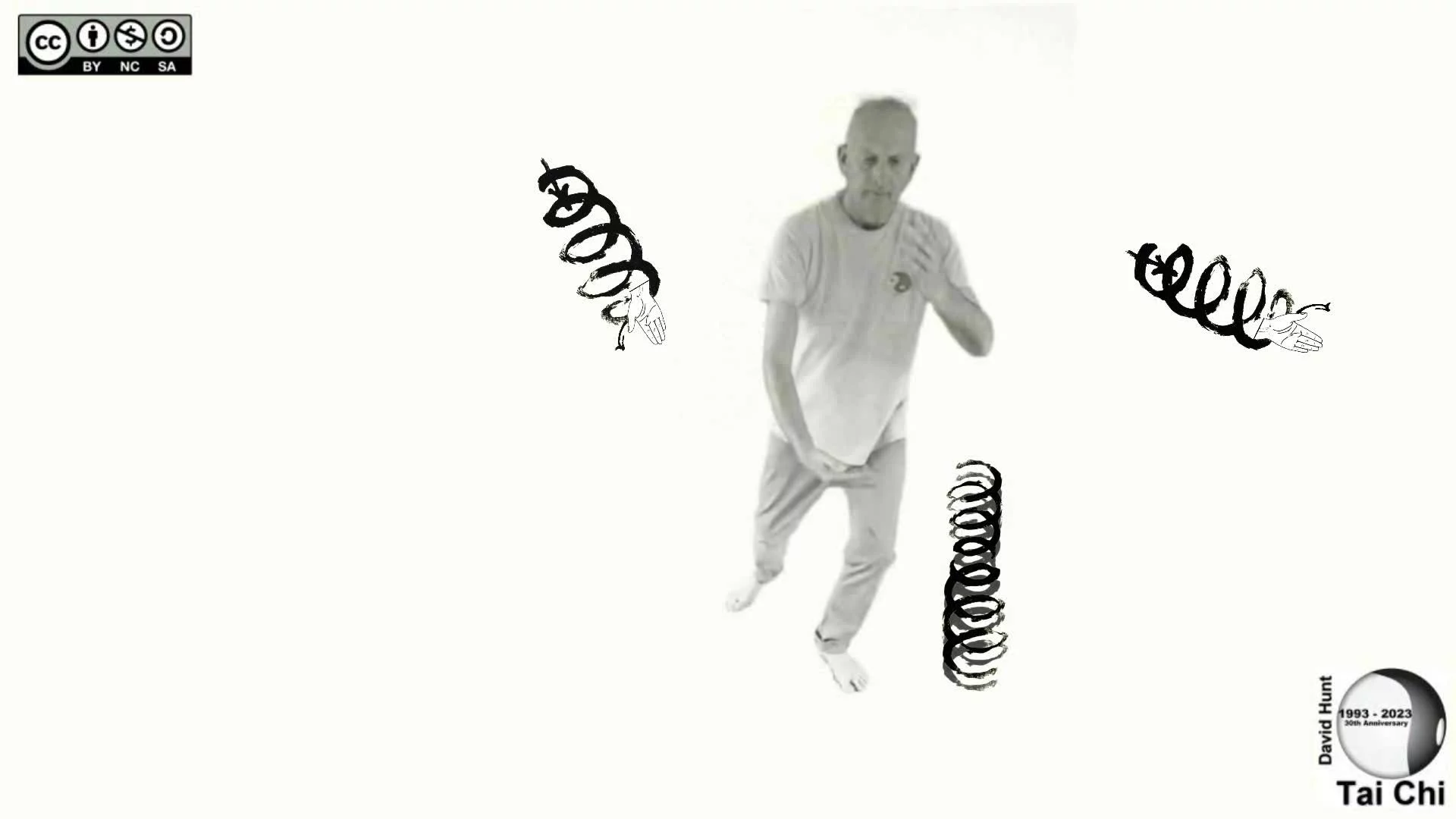
OUT BREATH 3: Let go of all flexing. Step towards the opposite corner move your centre of gravity forward transferring the bouncy springy sensation to the left leg. Then turn the waist or centre of gravity (lower ‘dāntián 丹田’) anticlockwise allowing a flexing or sinking down into the left leg. At the same time the hands circle away to the side. Making soft fists with both hand turn the thumbs inward so the back of the hands face you. Both fists circle up to stop in front of your face, the right fist below the left fist. When the hands are in the correct position this movement has the sensation of flexing the shoulders back closing the shoulder blades opening the chest.
INTENTION: The Embodied Tai Chi soft intention can be thought of as gently pressing the front of each fist into a large beach ball. The martial application must be applied with compassion and would be a strike to the top and bottom sides of an opponent’s head. The cross lateral action / intension is through the right hand and left leg. ROOT: Offset Punch is in some ways associated with the trigram an, a closed fisted ‘upward raised Push’ with the bursting up sensation associated with the flames of the element FIRE. However, the sensation with Offset Punch is an upward ark, the fists circle out to the sides then back in. Combined with the flexing into the front leg and your centre of gravity turning this posture can allow a WATER / WOOD element of ‘penetrating’ with in this case an upward ‘plucking’ sensation associated with the trigram tsai.
IN BREATH 4: Right Strike Tiger Yòu dǎ hǔ shì 右打虎式 also called Offset Punch. Let go of all intention and flexing including both fists. Rock back on the left heel your centre of gravity transferring the bouncy springy sensation to the right leg. The hands sink down towards the waist maintaining left hand above right hand. The thumbs of both hands turn outwards rotating the palms to face each other as if holding a ball. When the hands feel as if they are WITH your centre of gravity (lower ‘dāntián 丹田’) turn the left foot clockwise pivoting on the heel. Place the left foot down and move your centre of gravity back allowing the transfer of the bouncy springy sensation to transfer to the left leg allowing a flexing or sinking down into the left leg so you can let the right knee float up. When the hands are in the correct position this movement has the sensation of the shoulders flexing forward opening the shoulder blades.
INTENTION: The Embodied Tai Chi soft intention can be thought of as bringing a ball down from in front of your face to rest at your abdomen. The martial application must be applied with compassion and would be applied a sinking down neutralising action. The cross lateral action / intention is through the right hand and left leg. ROOT: The yin sitting back part of Offset Punch is associated with the trigram lui with the supporting leg flexing into its spring. Here ‘receiving calmly’ is associated with the EARTH element as the supporting leg and foot softly connect with the ground.
OUT BREATH 4: Let go of all flexing. Again step towards the opposite corner moving your centre of gravity forward transferring the bouncy springy sensation to the right leg. Then turn the waist or centre of gravity (lower ‘dāntián 丹田’) clockwise allowing a flexing or sinking down into the right leg. At the same time the hands circle away to the side. Making soft fists with both hands while turning the thumbs inward so the back of the hands face you. Both fists circle up to stop in front of your face, the left fist below the right fist. When the hands are in the correct position this movement has the sensation of flexing the shoulders back closing the shoulder blades opening the chest.
INTENTION: The Embodied Tai Chi soft intention can be thought of as gently pressing the front of each fist into a large beach ball. The martial application must be applied with compassion and would be applied as a strike to the top and bottom sides of an opponent’s head. The cross lateral action / intension is through the left hand and right leg. ROOT: Offset Punch is in some ways associated with the trigram an, a closed fisted ‘upward raised Push’ with the bursting up sensation associated with the flames of the element FIRE. However, the sensation with Offset Punch is an upward ark, the fists circle out to the sides then back in. Combined with the flexing into the front leg as your centre of gravity turns this posture can allow a WATER / WOOD element of ‘penetrating’ with in this case upward a ‘plucking’ sensation associated with the trigram tsai. A FULL DESCRIPTION WILL BE INCLUDED IN THE GUIDE